
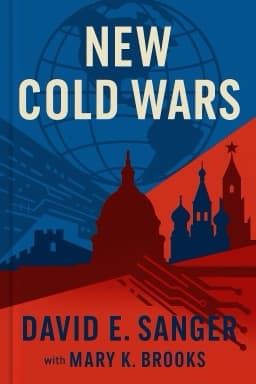
Unveiling the New Cold War: How Russia, China, and Cyber Battles Are Reshaping Global Power
Explore the complex forces driving today’s global tensions and what they mean for the future of international peace and security.

In the wake of the Cold War's end, many believed the world had entered an era of lasting peace and cooperation. However, the last decade has revealed a far more complex reality. The so-called 'new Cold War' pits major powers in a multifaceted contest that spans military, economic, technological, and ideological domains. At the heart of this transformation lies the resurgence of Russia, the rapid ascent of China, and the digital battlefield of cyber warfare.
Russia’s invasion of Ukraine in 2022, preceded by a groundbreaking intelligence leak exposing Kremlin plans, shattered post-Cold War optimism. This conflict is not just a territorial dispute but a struggle over historical narratives and spheres of influence. Vladimir Putin’s vision of restoring Russia’s imperial stature, combined with NATO’s eastward expansion, fuels an ongoing strategic rivalry that has reignited tensions reminiscent of the 20th century's great power confrontations.
Meanwhile, China’s rise from an economic reformer to a strategic competitor challenges the unipolar dominance of the United States. The country’s accession to the World Trade Organization symbolized its integration into the global order, but its continued political control and military modernization signal ambitions beyond mere economic growth. Leaders like Zhu Rongji laid the foundation for this transformation, balancing communist ideology with capitalist pragmatism.
Cyber warfare has emerged as a critical battleground where conflicts unfold invisibly yet with devastating effect. The 2017 NotPetya malware attack, originating from Russia and targeting Ukraine, spread worldwide, highlighting the global reach of digital weapons. AI-enabled drones and space-based assets further complicate the battlefield, raising ethical and strategic questions about the future of war.
Global alliances, especially NATO, have been revitalized in response to these threats, reaffirming commitments and expanding military cooperation. At the same time, the strategic partnership between China and Russia presents a formidable challenge to Western influence, blending economic, military, and diplomatic coordination without a formal alliance.
The ideological battle between democracy and autocracy adds another layer of complexity. Both governance models use social media and propaganda to influence domestic and international audiences, shaping perceptions and policies in a digital age where information is weaponized.
Despite these tensions, the risks of escalation—particularly nuclear—remain a sobering reality. Proxy conflicts and hybrid warfare increase unpredictability, demanding careful diplomacy and crisis management to avoid catastrophic outcomes.
Looking ahead, the path forward requires balancing competition with cooperation. Diplomatic engagement, multilateral forums, and collaboration on global challenges like climate change and pandemics offer hope for mitigating conflict and fostering stability. Technology can serve as a bridge rather than a barrier if harnessed wisely.
This new era demands nuanced understanding and thoughtful action. By learning from the past and embracing dialogue, the world can navigate the turbulent waters of the new Cold War toward a more peaceful and prosperous future.
For those seeking to grasp the intricate web of modern geopolitics, this exploration offers essential insights into the forces shaping our world today.
Sources: CSIS Conflict in Focus report, S&P Global Geopolitical Risk 2025, Council on Foreign Relations Conflicts to Watch 2025, RealClearDefense analysis on China-US Cold War
Want to explore more insights from this book?
Read the full book summary