
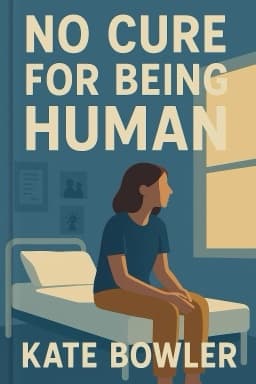
10 Raw Truths from 'No Cure for Being Human' That Will Change How You See Life
What a Stage IV Cancer Diagnosis Teaches Us About Living Honestly

What a Stage IV Cancer Diagnosis Teaches Us About Living Honestly
Imagine waking up one morning and discovering that your life—so carefully planned, so full of promise—has been completely upended by a diagnosis you never saw coming. This is the harrowing, beautiful reality explored in Kate Bowler’s 'No Cure for Being Human.' Bowler, a historian and mother in her thirties, finds herself suddenly facing Stage IV colon cancer. The world she thought she controlled is gone in a moment, replaced by hospital corridors, medical jargon, and the stark reality of limited time.
Bowler’s memoir quickly moves beyond her personal story to tackle universal themes: the myth of control, the pressure to be productive, and the cultural obsession with positivity. She exposes how self-help philosophies and prosperity gospel thinking—common in both religious and secular circles—promise that with enough effort or the right mindset, we can avoid tragedy. But when the worst happens, these narratives collapse, leaving us to wrestle with the raw truths of our humanity.
One of Bowler’s most powerful insights is the illusion of control. Before her diagnosis, she, like many of us, believed that careful planning and hard work could secure a bright future. But cancer shatters that belief, revealing how much of life is unpredictable and out of our hands. She writes with biting humor about the absurdity of bucket lists and the pressure to 'seize the day,' reminding us that it’s not the number of experiences we collect but the depth of our relationships that truly matters.
Bowler’s honesty about her struggles with gratitude, faith, and the limits of positivity is both refreshing and deeply moving. She describes the tension between feeling thankful for what remains and grieving what is lost, showing that true gratitude is not about denying pain but about recognizing beauty amid suffering. Her faith, too, is transformed—not a shield against hardship, but a source of comfort that makes room for doubt, anger, and ambiguity.
Community emerges as a lifeline in Bowler’s story. She learns the power of vulnerability—of asking for help and accepting love from others. Friends, family, and even strangers form circles of care that sustain her through the darkest days. These moments of connection, often imperfect and awkward, reveal that our greatest strength lies in our willingness to give and receive care.
As Bowler moves through treatment, remission, and the ongoing uncertainty of life after cancer, she discovers that hope is not a guarantee of happy endings but an act of courage—a choice to believe that something good can still grow, even in the most uncertain soil. She rejects the language of 'fighting' and 'winning,' favoring metaphors of endurance, patience, and gentle perseverance. Her story is a reminder that we all live with unfinished stories, and that beauty is often found in the ordinary, incomplete moments of daily life.
Bowler’s reflections on legacy and enoughness are especially poignant. She realizes that what endures is not a list of achievements, but the love, kindness, and memories we leave behind. In a world that demands more—more success, more experiences, more perfection—she finds peace in the sufficiency of being loved and loving others. Grief and joy, she reminds us, are not opposites but companions, enriching our stories and deepening the meaning of each day.
'No Cure for Being Human' is not just a memoir of illness; it is a meditation on what it means to be alive. Bowler’s wit, wisdom, and vulnerability invite us to let go of the myths that keep us striving for perfection and instead embrace the messy, beautiful reality of being human. Her story challenges us to cherish our connections, accept our limitations, and find hope—even when there are no guarantees.
By the end of her journey, Bowler leaves us with a simple, profound truth: being human is not a curse, but a gift—even when it breaks your heart.
For anyone seeking comfort, honesty, and hope in the face of uncertainty, this book is a must-read.
Want to explore more insights from this book?
Read the full book summary