
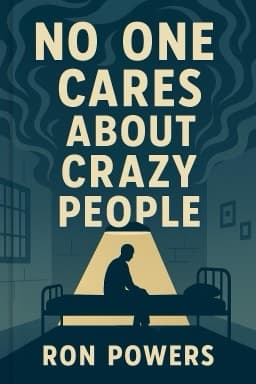
The Untold Story Behind America’s Mental Health Crisis: What ‘No One Cares About Crazy People’ Reveals
How One Family’s Tragedy Became a Rallying Cry for Compassion and Reform

How One Family’s Tragedy Became a Rallying Cry for Compassion and Reform
Ron Powers’ 'No One Cares About Crazy People' is a book that punches you in the gut, then gently takes your hand and leads you through the labyrinth of love, loss, and advocacy. The story begins in the warmth of a close-knit family, where two sons—Dean and Kevin—grow up with all the hope and promise of any American children. But when schizophrenia enters their lives, everything changes. Powers describes the first signs: subtle shifts in behavior, a growing sense of unease, and the eventual, shattering diagnosis. Families like his are thrust into a world of medical jargon, insurance battles, and, worst of all, societal indifference.
The book is not just a memoir; it’s a sweeping history of mental health care in America. Powers traces the evolution from ancient shamanic rituals to the horrors of Bedlam and the rise and fall of asylums. He shows how deinstitutionalization, while well-intentioned, left thousands without support, pushing the mentally ill into homelessness and incarceration. Powers’ personal story is interwoven with tales of reformers, activists, and those who have been failed by the system. He doesn’t shy away from describing the heartbreak of losing Kevin to suicide, nor the ongoing struggle to support Dean. Through these stories, he exposes the legal and ethical dilemmas of involuntary treatment, the agony of family members who are locked out of decision-making, and the persistent stigma that keeps mental illness in the shadows.
Yet, the book is ultimately about hope. Powers highlights the rise of advocacy organizations, the power of personal storytelling, and the resilience of families who refuse to give up. He calls for a future where compassion, not fear, guides policy and practice. The message is clear: we must see the humanity behind the diagnosis, and we must act—not just for those we love, but for all who struggle in silence.
Key Takeaways:
- Mental illness is a family and societal issue, not just an individual problem.
- Stigma and denial remain major barriers to care and recovery.
- Deinstitutionalization without adequate community support has led to new crises.
- Advocacy and storytelling are powerful tools for change.
- There is hope, but it requires collective action and empathy.
‘No One Cares About Crazy People’ is a must-read for anyone who wants to understand the reality of mental illness in America—and what we can all do to make things better.
Want to explore more insights from this book?
Read the full book summary