
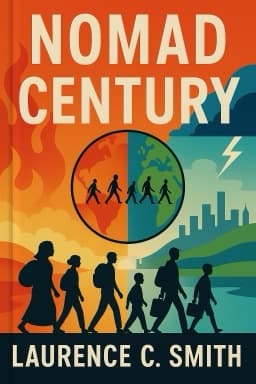
Why Migration Is the Key to Surviving the Anthropocene – And How Borders Are Killing Us
Unpacking the paradox of migration as survival and the political walls that threaten our collective future

Migration has been humanity’s lifeline for millennia, enabling adaptation to environmental shifts and social upheavals. Yet today, as the Anthropocene ushers in unprecedented climate challenges, migration is paradoxically constrained by political borders and restrictive policies.
In the 19th century, migration rates were high — about 14% of the global population moved internationally. Now, with a population nearly four times larger, only 3% migrate across borders. This sharp decline is driven by passports, visas, border walls, and enforcement agencies that fragment the world into isolated enclaves.
These barriers have severe economic consequences. Restricting labor mobility reduces global GDP by an estimated 100 to 150%, stifling innovation and growth. Refugee camps, often the only refuge for millions displaced by conflict or climate disasters, trap people in cycles of poverty and despair, denying them the right to work or integrate.
Consider the world’s largest refugee camp, housing nearly a million individuals with limited services and rights. These are not just humanitarian failures but lost opportunities for societies to benefit from the skills, resilience, and contributions of displaced people.
The paradox is stark: while goods, capital, and information flow more freely than ever, people remain the most restricted commodity.
Unlocking migration requires dismantling barriers, reforming policies, and fostering international cooperation. This shift will enable humanity to harness migration’s full potential in addressing climate change, demographic shifts, and economic challenges.
Want to explore more insights from this book?
Read the full book summary