
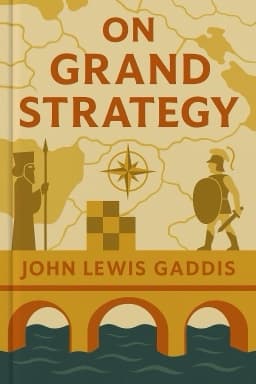
Unlocking the Secrets of Grand Strategy: How Ancient Wisdom Can Transform Modern Leadership
Discover how lessons from history’s greatest strategists can guide today’s leaders through complexity and uncertainty.

Grand strategy is a concept that transcends time, geography, and culture. At its heart lies the challenge of aligning potentially unlimited ambitions with necessarily limited capabilities. This delicate balance has been the crucible in which leaders from Xerxes to Elizabeth I have forged their legacies.
Consider the Persian king who sought to cross the Hellespont with a vast army, building two enormous bridges from hundreds of boats. This feat was not just an engineering marvel but a metaphor for the strategic tension between boldness and prudence. His advisor warned against overreach, reminding us that grand strategy is as much about humility as it is about vision.
Moving from ancient Persia to the city-states of Greece, we find Athens and Sparta embodying contrasting strategic cultures. Athens built its Long Walls to secure its port and sustain a naval empire, while Sparta relied on its elite land forces and minimal fortifications. These choices were not merely military but cultural, shaping identities and alliances that led to the Peloponnesian War.
At the heart of strategy lies the interplay between principles and practice. Ancient masters taught that an army is like water—fluid, adaptable, and opportunistic. Mentorship and learning are critical, helping leaders tether timeless wisdom to the messy realities of terrain, morale, and chance.
Leadership itself demands a unique balance of intellect and temperament. The ability to hold opposing ideas in mind and act decisively is rare but essential. Temperament acts as a gyroscope, stabilizing genius amid the fog of uncertainty.
Philosophical foundations shape how strategy is conceived—whether as subject to divine order or as the product of human agency. Augustine’s moral framework contrasts with Machiavelli’s pragmatic realism, highlighting the tension between ethics and necessity.
Historical exemplars like Octavian and Elizabeth I demonstrate how strategic patience and adaptability lead to enduring success. Their stories remind us that grand strategy is a dynamic process of continuous adjustment, self-awareness, and courage.
In the modern world, warfare and power have evolved, demanding new approaches. Smaller, asymmetric conflicts replace massive battles, and education blends history with theory to prepare leaders for complex challenges.
Ultimately, grand strategy is about choice—the necessity and agony of making decisions amidst uncertainty. No plan is perfect, and trade-offs are inevitable. Common sense, balancing vision and reality, is the bridge that makes strategy practical and effective.
This journey through grand strategy invites you to reflect on your own challenges, inspiring you to lead with insight, adaptability, and optimism. The crossing of every strategic Hellespont begins with a single deliberate step.
For those seeking to deepen their understanding, exploring the rich lessons of history combined with modern theory offers a roadmap to mastering the art of grand strategy.
Sources: NDU Press, Army Cove, Goodreads, Yris Reviews 1 2 3 4
Want to explore more insights from this book?
Read the full book summary