
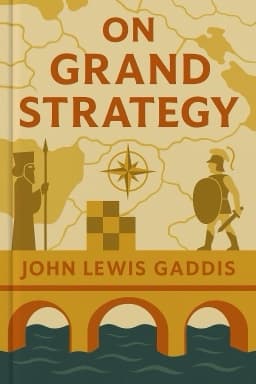
Why Every Leader Needs to Master Grand Strategy: Lessons from 2,500 Years of History
From ancient battles to modern boardrooms, grand strategy is the key to sustainable success and wise decision-making.

Leadership without strategy is like a ship without a rudder—adrift and vulnerable. Grand strategy, defined as the alignment of unlimited aspirations with limited capabilities, is the compass that guides leaders through the fog of complexity. This concept, masterfully explored by John Lewis Gaddis, draws from an extraordinary sweep of history spanning 2,500 years, offering insights that remain profoundly relevant.
From the Persian king who dared to bridge the Hellespont to the Athenians who fortified their city’s lifeline, history teaches us that strategy is as much about culture and identity as it is about military might. The contrasting approaches of Athens and Sparta illustrate how physical walls and cultural values shape strategic choices and their consequences.
Strategy demands more than plans; it requires mentors and principles to tether lofty ideals to practical realities. The ancient metaphor of armies flowing like water reminds us that flexibility and adaptation are essential. Leaders who embrace this fluidity, guided by wise counsel, navigate uncertainty with greater success.
Yet intellect alone is insufficient. Temperament—the emotional steadiness and cognitive flexibility to hold opposing ideas—is the gyroscope that stabilizes genius. Leaders who master this balance can make sound decisions under pressure, a quality exemplified by historical figures like Octavian and Elizabeth I.
Philosophical frameworks underpin these lessons, from Augustine’s emphasis on divine moral order to Machiavelli’s pragmatic focus on human agency. Effective strategy negotiates this tension, balancing ethical constraints with the harsh realities of power.
Modern challenges require us to apply these ancient lessons anew. The nature of conflict has evolved, emphasizing asymmetric tactics and complex environments. Education now integrates history and theory, preparing leaders to adapt and innovate.
Ultimately, grand strategy is about making hard choices amidst uncertainty, accepting trade-offs, and maintaining common sense. It is a lifelong journey of learning and adaptation, demanding resilience, wisdom, and optimism.
For leaders seeking to thrive in today’s unpredictable world, mastering grand strategy is not optional—it is essential. By studying history’s greatest strategists and embracing the principles they embody, you can navigate complexity and lead with confidence.
Sources: NDU Press, Army Cove, Goodreads, Yris Reviews 1 2 3 4
Want to explore more insights from this book?
Read the full book summary