
Building the Future: How Brain-Inspired Machines Will Transform AI and Society
The next generation of AI won’t look like robots — it will think like brains.

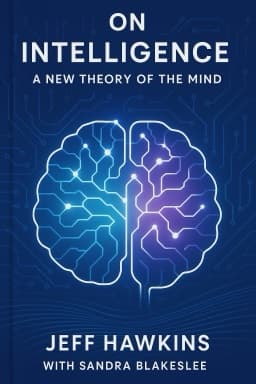
As artificial intelligence evolves, a paradigm shift is underway. Instead of chasing humanoid robots or brute computational power, the focus is turning toward machines that learn and predict like the human brain. Jeff Hawkins’ 'On Intelligence' lays the foundation for this new direction, proposing that replicating the brain’s memory-prediction framework is key to true machine intelligence.
These brain-inspired machines will not possess emotions or ambitions but will excel at learning hierarchical memories, predicting future inputs, and adapting to new situations. Unlike early AI systems, they will handle abstract tasks with remarkable efficiency, transforming fields from medicine to engineering.
However, the brain’s fault tolerance and modular design provide valuable blueprints. Machines can be designed to gracefully handle damage and learn incrementally, making them robust and scalable.
Society must prepare for the ethical and practical implications. Intelligent machines will augment human capabilities, not replace them. Thoughtful integration, transparent guidelines, and collaboration will ensure these technologies benefit all.
Ultimately, embracing the brain’s principles in AI heralds a future where humans and machines co-create knowledge, solve complex problems, and expand the horizons of intelligence.
Want to explore more insights from this book?
Read the full book summary