
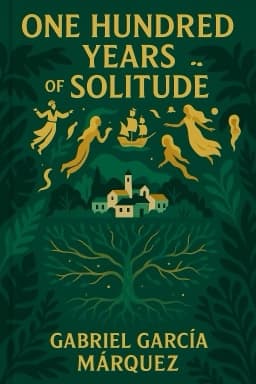
Magical Realism Decoded: How Fantasy and Reality Collide in 'One Hundred Years of Solitude'
Discover the literary magic that blurs the lines between the real and the fantastical in Marquez’s masterpiece.

Magical realism is a literary style that defies simple definition, but in Gabriel Garcia Marquez’s One Hundred Years of Solitude, it achieves its most sublime form. The novel invites readers into a world where the extraordinary is part of everyday life, where flying carpets soar above the jungle and a giant diamond of ice captivates a small village.
In Macondo, magic is not an escape but a lens through which deeper truths are revealed. The gypsies’ inventions—magnets that stir pots, telescopes that shrink distance—are accepted without question, embodying the seamless integration of fantasy and reality. The yellow butterflies that endlessly flutter around certain characters symbolize love, fate, and the ephemeral nature of life.
This approach challenges readers to suspend disbelief and embrace contradictions. The novel treats supernatural events as natural occurrences, inviting us to reconsider what we define as real. This narrative style has its roots in Latin American culture, where myth and history often intermingle, and it has influenced countless writers worldwide.
Symbolism runs deep in the magical elements. The giant diamond of ice, for example, represents mystery and transformation, the intrusion of the unfamiliar into the known world. The alchemical laboratory and the philosopher’s stone symbolize human curiosity and the quest for knowledge, blending science and magic.
Through magical realism, Marquez crafts a story that is both universal and deeply rooted in a specific cultural context. It is a celebration of imagination and a profound exploration of human experience.
Next, we will examine how historical and political forces shape Macondo, adding layers of complexity to this already rich narrative.
Sources: 1 , 3 , 4
Want to explore more insights from this book?
Read the full book summary