
Why Openness Is the Secret Sauce of Civilization (And How We Can Lose It)
Discover how open minds, open borders, and open markets have repeatedly saved—and advanced—humanity.

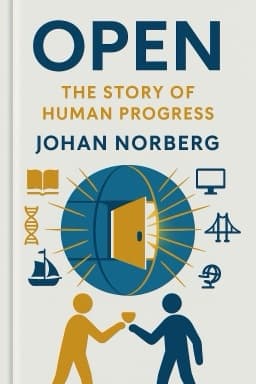
Imagine a world where every door is open—a world where people, goods, and ideas flow freely across borders and boundaries. This isn’t just a utopian dream; it’s the foundation on which human civilization has repeatedly built its greatest achievements. In 'Open: The Story of Human Progress,' Johan Norberg makes a compelling case that our willingness to connect with strangers, to trade, to migrate, and to borrow from other cultures, is what truly sets our species apart.
From the earliest obsidian traders of prehistoric Kenya to the globalized world of today, openness has been humanity’s greatest asset. Genetic research reveals that even the most 'traditional' societies are melting pots, shaped by centuries of migration and mixing. The foods we eat, the clothes we wear, even the languages we speak, are all products of centuries of cultural borrowing.
But openness is not just about diversity for its own sake. It’s about creating the conditions for specialization, innovation, and resilience. Cities, those great engines of progress, thrive when they are open—when they welcome newcomers, encourage debate, and connect diverse talents. Studies show that a city ten times larger than another is seventeen times more innovative, thanks to dense networks of exchange and learning.
Of course, the story of openness is not one of uninterrupted progress. History is full of moments when fear and crisis drove societies to build walls, both literal and metaphorical. The tragedy of Tasmania, where isolation led to the loss of even basic technologies, is a stark warning. The protectionist policies of the 1930s, which deepened the Great Depression, remind us that retreating from the world rarely brings safety or prosperity.
Yet the cycle is not inevitable. Societies can—and do—renew themselves by reopening to the world. The Renaissance, the postwar boom, and the modern era of globalization all show how quickly progress can resume when barriers fall.
So how do we keep the flame of openness alive? Strong institutions matter—rule of law, free speech, open markets—but so do everyday acts of curiosity and kindness. When we teach a child to wonder, welcome a neighbor, or question received wisdom, we are planting the seeds of progress.
In the end, the story of openness is the story of us all: a story still being written, one choice at a time.
For a deeper dive into the historical and scientific evidence—and what it means for our future—read on as we explore the cycles of openness, the role of cities, and how you can become a guardian of progress in your own life.
Want to explore more insights from this book?
Read the full book summary