
The Hidden Costs of ‘Perfect’ Efficiency: Why Optimization Isn’t Always the Answer
Discover the unseen fragilities lurking behind our obsession with optimization and how embracing imperfection could save us.

Optimization has become the watchword of our age, the lens through which we view progress, success, and mastery over complexity. Whether in the fields of agriculture, the algorithms that shape our online experiences, or the intricate supply chains that deliver goods worldwide, the drive to find the 'best' way forward permeates every facet of life. But beneath this seductive promise lies a paradox: the very pursuit of perfect efficiency often sows the seeds of fragility and failure.
Consider the Green Revolution, a monumental leap in agricultural productivity that fed billions by breeding dwarf wheat varieties and mechanizing harvests. This transformation was hailed as a triumph of human ingenuity, yet it also introduced vulnerabilities—monocultures replaced diverse ecosystems, soil health declined, and communities became dependent on global supply chains. The relentless push for maximum yield left little room for error, making the system brittle in the face of environmental shocks.
Similarly, in the digital realm, the atomization of processes into discrete units, the abstraction of complex realities into mathematical models, and the automation of tasks have revolutionized industries. Yet, these advances come at a cost. The quest for efficiency strips away the slack and redundancy that cushion systems against disruption. The infamous Texas power grid failure, triggered by a polar vortex, exposed how a tightly optimized but inflexible infrastructure can collapse catastrophically when stressed.
Culturally, efficiency has evolved from a practical virtue into a moral imperative. Figures like Benjamin Franklin championed frugality as a pathway to personal and societal success. Today, minimalist movements and Silicon Valley’s data-driven management culture extend this ethos to emotional and social realms. Yet, this drive often diminishes spontaneity and deep human connection, revealing a tension between control and freedom.
Resistance emerges in many forms: ecological restoration projects reintroduce wild bison to prairies, symbolizing a reclaiming of balance; social experiments like Universal Basic Income challenge optimized economic models by prioritizing human dignity over pure efficiency. These efforts underscore that resilience depends not on perfect control but on embracing complexity, uncertainty, and diversity.
Ultimately, the path forward invites us to drop the language of efficiency as the sole measure of value and open ourselves to new narratives that honor paradox and pluralism. Islands of innovation and refuge remind us that sustainable futures arise from balance—between connection and isolation, order and chaos, tradition and innovation.
By rethinking optimization, we reclaim agency not as masters of fate but as humble participants in a shared unfolding story, crafting lives and systems that are robust, meaningful, and alive.
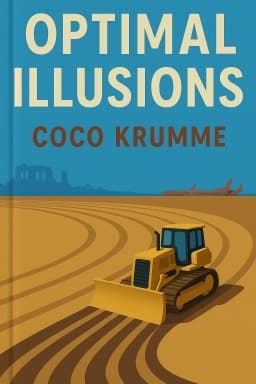
For those eager to explore these ideas further, seminal works such as the insightful critiques in 'Optimal Illusions,' the profound explorations of uncertainty in 'Antifragile,' and the systemic perspectives in 'Resilience' provide invaluable guidance and inspiration.
Embrace imperfection. Welcome complexity. Discover strength in resilience.
Want to explore more insights from this book?
Read the full book summary