
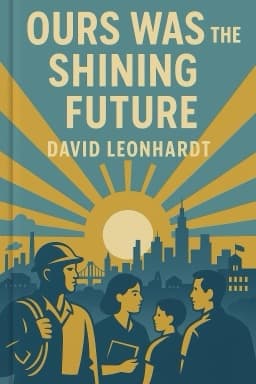
Article from Book Summary
5 Surprising Secrets Behind America's Greatest Prosperity
What We Can Learn from the Golden Age of the American Dream

Reading Rainbows
November 11, 2024682 views
Ours Was the Shining Future: The Story of the American DreamDavid Leonhardt
What We Can Learn from the Golden Age of the American Dream
Why did the American middle class explode in the decades after World War II? The answer, as David Leonhardt’s research shows, lies in five often-overlooked secrets—each one a pillar of the most equitable, dynamic economy the world has ever seen. This blog uncovers those secrets and asks what it would take to revive them today.
- Union Power: Unions didn’t just raise wages—they built communities. By fighting for fair pay and safe conditions, they gave workers a voice and a sense of belonging. Strikes weren’t just about money; they were about dignity. Union towns became the backbone of the middle class, and the wage premium for unionized workers lifted millions out of poverty.
- Corporate Citizenship: Postwar business leaders saw moderation as patriotic. Many capped their own pay, supported Social Security, and invested in their workers. They understood that their fortunes rose and fell with the prosperity of the country. This ethic of responsibility is a far cry from the shareholder-first mentality of recent decades.
- Massive Public Investment: The government spent big on highways, schools, and science. These investments paid off in the form of new industries, more jobs, and a better quality of life. The GI Bill alone sent millions to college, transforming the nation’s workforce.
- Inclusive Culture: The culture of the era valued moderation and shared sacrifice. Business, labor, and government worked together, and the Dream was seen as a collective project. This spirit of unity was crucial to the country’s success.
- Adaptation and Renewal: Even during the good times, America faced crises—racial injustice, gender inequality, and more. The country’s greatest strength was its ability to adapt, expand the circle of opportunity, and renew its commitment to the Dream.
As these pillars weakened in the late 20th century, prosperity became more concentrated and the Dream faded for many. Yet, the lessons of the past remain powerful tools for the present. America’s greatest prosperity was not an accident—it was built, together.
Want to explore more insights from this book?
Read the full book summary