
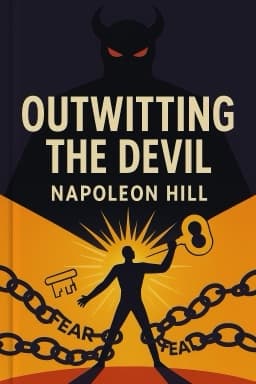
Why ‘Outwitting the Devil’ Was Banned for 70 Years (And Why You Need to Read It Now)
The Untold Story Behind Napoleon Hill’s Most Dangerous Book

The Untold Story Behind Napoleon Hill’s Most Dangerous Book
Imagine writing a book so provocative, so fearless in its critique of society’s most sacred institutions, that your own family locks it away for generations. That’s the story behind Napoleon Hill’s ‘Outwitting the Devil.’ Written in the shadow of the Great Depression, the book was considered too dangerous for public eyes. Why? Because it dared to question the pillars of society—religion, education, and authority—and suggested that these very systems, while well-intentioned, often serve to perpetuate the fears that keep people from realizing their potential.
Hill’s interview with the Devil is a literary device, but its implications are real. The Devil claims that organized religion, by focusing on sin and punishment, cultivates fear instead of faith. Traditional education, with its emphasis on conformity and rote learning, stifles creativity and independent thought. These ideas were explosive in the 1930s, and even today, they challenge us to rethink the way we are taught to live.
The manuscript languished in a vault for over 70 years, its existence known only to a handful of people. It wasn’t until 2011 that the world finally got to read Hill’s most controversial work. The reaction was immediate and intense. Some hailed it as a masterpiece of self-help literature; others condemned it as reckless and subversive. But no one could ignore its power.
What makes ‘Outwitting the Devil’ so relevant today? For one, it exposes the subtle ways fear is used to control populations. By naming and dissecting these mechanisms, the book empowers readers to reclaim their autonomy. It also champions the idea that true progress—personal and societal—comes from questioning, not blindly following, authority.
Ultimately, the story of this book’s suppression and eventual publication is a lesson in the power of ideas. The truth may be uncomfortable, but it is always worth seeking. For anyone who values independent thought and personal freedom, ‘Outwitting the Devil’ is essential reading.
To explore more about the book’s history and impact, visit XandWhy and 12min.com.
2
4
Want to explore more insights from this book?
Read the full book summary