
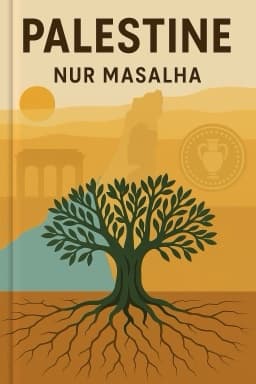
Unveiling 4,000 Years of Palestine: The Untold Story That Changes Everything
Discover the deep roots of Palestine beyond modern conflicts through a groundbreaking historical narrative.

Palestine is often discussed in the context of modern political conflict, yet its story stretches back thousands of years, woven into the fabric of human civilization. In his seminal work, Nur Masalha offers a sweeping historical narrative that spans four millennia, revealing Palestine as a land of enduring identity and cultural richness.
From the indigenous Philistines who thrived along the southern Levantine coast to the classical Greek and Roman historians who expanded the concept of Palestine beyond its original borders, the book traces the evolution of place names, peoples, and cultures. Masalha meticulously dismantles the myth that Palestine is a modern invention, showing instead a continuous geographical and cultural entity documented in Egyptian, Assyrian, Greek, and Roman sources.
Byzantine rule introduced a 'Three in One' provincial structure that fostered religious and intellectual flourishing, with cities like Caesarea and Gaza becoming renowned centers of learning. The subsequent Arab Islamic period preserved and transformed this heritage under the province of Jund Filastin, marked by religious pluralism and vibrant urban life. Ottoman reforms and the rise of nationalism in the 19th century awakened a modern Palestinian identity, deeply rooted in territorial attachment and cultural expression such as traditional embroidery and literature.
However, colonial impositions during the British Mandate and the Zionist settler-colonial project led to profound disruptions, culminating in the Nakba of 1948, which caused mass displacement and cultural erasure. Masalha’s narrative does not end in tragedy; it emphasizes resilience through cultural preservation, oral histories, and ongoing struggles for justice and recognition.
This book is essential reading for anyone seeking to understand Palestine beyond headlines, providing a nuanced, deeply researched, and empathetic portrait of a land and people whose history continues to unfold. It is a call to acknowledge the past honestly and engage with the present with greater awareness and compassion.
Explore this rich tapestry of history and identity, and discover how Palestine’s story challenges and enriches our understanding of the Middle East and the world.
References: 1 , 2 , 3
Want to explore more insights from this book?
Read the full book summary