
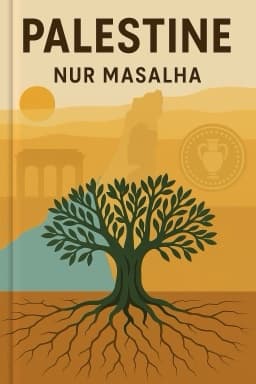
Why 'Palestine: A Four Thousand Year History' Is a Game-Changer for Middle East Studies
A deep dive into Nur Masalha’s groundbreaking reinterpretation of Palestine’s past and its political implications.

The study of Palestine’s history has long been mired in political controversy and competing narratives. Nur Masalha’s 'Palestine: A Four Thousand Year History' offers a comprehensive, evidence-based account that redefines the historical landscape of the region.
Masalha’s scholarship is notable for its interdisciplinary approach, integrating archaeological discoveries, ancient texts, and cultural analysis. He challenges the notion that Palestinian identity is a modern invention, demonstrating instead that the indigenous peoples of Palestine have maintained continuous cultural and territorial ties for millennia. This stands in direct opposition to narratives that seek to delegitimize Palestinian claims to the land.
The book also critically examines the impact of colonialism and settler-colonialism, particularly during the British Mandate and the establishment of Israel. Masalha argues that the ethnic cleansing of Palestinians and the renaming of places were deliberate strategies to erase Palestinian presence and history.
By foregrounding Palestinian voices and experiences, Masalha’s work is a vital corrective to dominant historiographies that often marginalize indigenous perspectives. It invites scholars, students, and policymakers to reconsider the foundations of the Israeli-Palestinian conflict and the possibilities for reconciliation based on historical truth and justice.
This book’s rigorous analysis and compelling narrative make it indispensable for anyone seeking a deeper, more honest understanding of Palestine and the broader Middle East.
References: 1 , 4
Want to explore more insights from this book?
Read the full book summary