
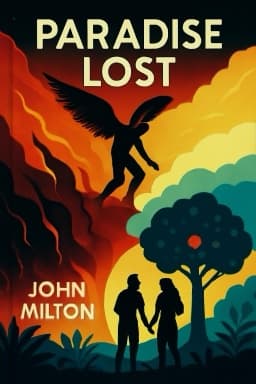
Unveiling the Cosmic Drama: How Paradise Lost Redefines Good, Evil, and Free Will
Dive deep into the epic struggle that shaped humanity’s destiny and the eternal battle between light and darkness.

John Milton’s Paradise Lost stands as a monumental work that transcends simple biblical retelling to probe the depths of human nature, cosmic justice, and spiritual struggle. At its core, it presents an epic battle that begins with a proud spirit’s rebellion in Heaven, leading to a war that shakes the foundations of eternity. This spirit, often referred to as Satan, is portrayed with a complexity rarely seen before — a figure of tragic ambition and unyielding will.
The war is vast, involving millions of angels, and concludes with the rebels cast into a fiery abyss — Hell. Yet, this is only the beginning. From this infernal realm rises a new plan to corrupt the creation that replaced them: mankind. The creation of man is depicted as a moment of divine grace, where humans are uniquely endowed with reason and free will, setting them apart from other creatures. This freedom is crucial, for it lays the groundwork for moral responsibility and the possibility of obedience or rebellion.
The Garden of Eden represents perfect innocence, a lush paradise filled with vibrant life and harmony. However, the presence of the forbidden tree introduces a test—an invitation to choose obedience or to fall into disobedience. The tempter’s subtle manipulation of the first woman reveals the psychological warfare of temptation, exploiting curiosity and desire rather than force. The man’s choice to join in the fall out of love and solidarity adds a profound layer of human complexity to this tragedy.
Divine judgement follows, balancing justice with mercy. While sin must be punished, the narrative emphasizes compassion and the promise of redemption. A divine mediator offers to take on human form to atone for mankind’s sins, introducing hope amid despair. This theme of mercy intertwined with justice reflects a nuanced theological perspective that resonates deeply with readers.
Central to the poem’s philosophy is the interplay between free will and fate. Milton argues that true obedience requires freedom; without it, love and faith lose meaning. Foreknowledge of the future by the divine does not negate human choice, preserving moral responsibility. This cosmic dance between destiny and freedom invites reflection on our own lives and choices.
The eternal struggle between good and evil is depicted as a battle not between equal forces but between light and the absence of light. Evil is characterized as a privation, a corruption of good rather than a created substance. Despite the fierce conflict, good is destined to triumph, restoring order and hope. Angels serve as moral exemplars and warriors, organized in hierarchical ranks from seraphim to archangels, embodying virtues and divine service.
Finally, the epic closes on a note of hope and resilience. Though humanity has fallen, the promise of redemption remains alive. The story celebrates the enduring spirit to rise, persevere, and seek restoration. This message of optimism and faith continues to inspire readers across centuries.
Milton’s Paradise Lost remains a timeless masterpiece because it intertwines grand cosmic themes with intimate human emotions, challenging us to ponder pride, choice, justice, and mercy. It invites us to see beyond the surface of good and evil, to embrace the complexity of freedom, and to hold onto hope even in the darkest times.
This exploration barely scratches the surface of Milton’s profound work, but it offers a gateway to understanding why Paradise Lost continues to captivate and enlighten readers worldwide.
Sources: Study.com, Literariness.org, Sparknotes.com, EBSCO.com 1 2 3 4
Want to explore more insights from this book?
Read the full book summary