
Unlocking the Secrets of Perfect Confidence: Why Most People Misjudge Themselves and How You Can Get It Right
Discover the hidden dynamics of confidence that shape every decision you make and learn how to master the art of perfectly calibrated confidence for a better life.

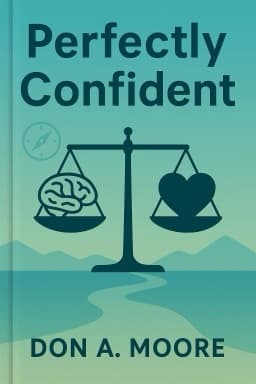
Imagine standing at a crossroads, the sun rising gently over distant mountains, as you hold a scale weighing your self-belief. This metaphor captures the essence of confidence—not as a fixed trait but as a judgment grounded in evidence and reality.
At the heart of these questions lies the concept of confidence calibration. Confidence is not a monolith; it has distinct forms—estimation (how good you think you are), placement (how you compare to others), and precision (how sure you are about your beliefs). Misalignments among these forms cause errors that ripple through decisions big and small.
Overconfidence is the loud shadow in this story. From the collapse of financial markets to engineering disasters, excessive certainty blinds us to risks. For example, the 2008 financial crisis was fueled by misplaced faith in flawed risk models and unchecked optimism. Meanwhile, underconfidence manifests quietly—talented individuals hesitate to apply for opportunities, held back by impostor syndrome or self-doubt. Both extremes distort reality and reduce the quality of our choices.
How can we escape these traps? The answer lies in embracing uncertainty and thinking probabilistically. Instead of saying, 'I will finish this project in six months,' consider a range of outcomes with assigned probabilities. This nuanced approach acknowledges the unpredictable nature of life and leads to better forecasts.
Yet, human minds tend to simplify probabilities—often defaulting to a 50% guess when uncertain—and overweight rare events, which explains why people both buy insurance and gamble. Recognizing these biases is the first step toward clearer judgment.
Balancing optimism with realism requires tools like premortems—imagining failure before it happens to identify risks—and postmortems, learning from mistakes without blame. Cultivating clear standards and welcoming diverse perspectives further anchors confidence in reality, reducing overplacement and groupthink.
Finally, expressing confidence honestly and embracing accountability strengthens trust and sharpens judgment. Leaders who transparently communicate uncertainty foster collaboration and resilience.
Perfectly calibrated confidence is the middle path—a harmony of courage and humility, boldness and caution. It frees us from arrogance and fear, leading to wiser decisions, richer relationships, and deeper fulfillment.
In a world awash with uncertainty, mastering this art is not just valuable—it is essential.
Want to explore more insights from this book?
Read the full book summary