
Why Your To-Do List Fails and How Personal Kanban Fixes It Forever
Ditch the endless to-do list and discover a smarter way to get things done with Personal Kanban.

We all know the feeling: staring at a daunting to-do list that seems to grow faster than you can cross off items. Despite your best intentions, tasks slip through the cracks, priorities blur, and motivation wanes. Why do traditional to-do lists often fail us?
One major flaw is that to-do lists keep tasks hidden in a linear, text-heavy format, making it hard to grasp the bigger picture. They don’t show the current state of work or the flow from start to finish. This lack of visibility leads to mental overload and decision fatigue.
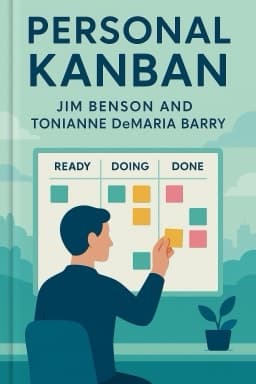
Personal Kanban addresses these issues by visualizing work on a board, splitting tasks into stages like READY, DOING, and DONE. This visual workflow provides immediate clarity on what needs attention and what’s completed. It harnesses the power of spatial memory and visual cues to reduce cognitive load.
Another common mistake is trying to do too many things at once. Multitasking divides your attention and lowers efficiency. Personal Kanban’s rule to limit work-in-progress ensures you focus on a manageable number of tasks, improving quality and reducing stress. Imagine a freeway: filling every lane with cars doesn’t guarantee faster travel; smooth flow does.
Building your own Personal Kanban board is easier than you might think. Start with sticky notes and a whiteboard or even digital tools designed for Kanban. Capture every task, no matter how small, in a backlog. Then pull tasks into active columns based on priority and capacity. Adjust your WIP limits as you learn your pace.
By embracing this system, you transform your workflow from a chaotic to-do list into a dynamic, living map of your work and life. You’ll find yourself more focused, less stressed, and better able to handle interruptions and changes.
Ready to stop drowning in your to-do list? Personal Kanban offers a proven, flexible path to meaningful progress and calm productivity.
Sources: Based on the principles and examples from Personal Kanban and productivity psychology research. 1 3 4
Want to explore more insights from this book?
Read the full book summary