
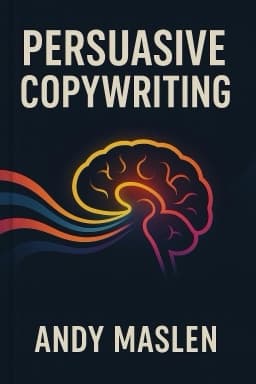
Unlock the Secret Power of Emotion in Copywriting: Why Facts Alone Won't Sell Your Product
Discover how tapping into emotions can transform your copy from forgettable to irresistible.

In today’s fast-paced world, consumers are bombarded with information from every direction. Yet, despite the sheer volume of facts and figures presented, many marketing messages fall flat. Why? Because the human brain does not decide based on logic alone.
Andy Maslen’s groundbreaking book 'Persuasive Copywriting' reveals that the limbic system—the ancient emotional center of the brain—is activated first when people make choices. This means that no matter how well-crafted your logical arguments are, if they don't connect emotionally, they risk being ignored.
Consider the power of curiosity, often overlooked in marketing. Curiosity acts like a mental itch, compelling people to seek answers and engage deeply. Headlines that tease secrets or make bold promises leverage this instinct, drawing readers in with irresistible hooks.
For example, a promise such as 'Lose weight without giving up chocolate' speaks directly to a desire many share, while a secret like 'The hidden ingredient top chefs won’t reveal' creates exclusivity and intrigue. These emotional triggers make messages memorable and motivate action far more effectively than mere data.
Understanding these emotional drivers enables marketers to craft copy that resonates on a primal level, turning passive readers into enthusiastic customers. This emotional-first approach is not manipulation; it’s aligning communication with how humans naturally think and feel.
By integrating emotional insights with compelling promises and secrets, your copywriting can break through the noise and truly connect with your audience, leading to increased engagement and sales.
In the next blog, we’ll explore how storytelling can amplify these emotional connections, making your copy even more persuasive and memorable.
Sources: Salvador Briggman Review, The Write Copy Girl, Bartlett Editorial, Haydn Grey 1 2 3 4
Want to explore more insights from this book?
Read the full book summary