
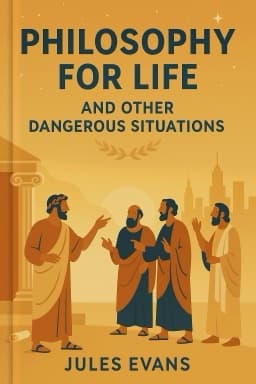
Why Stoicism Isn’t Just for Ancient Philosophers: The Ultimate Guide to Mental Toughness
Harness the Stoic mindset to conquer stress, anxiety, and modern challenges with calm confidence.

Modern life bombards us with stressors — deadlines, social pressures, global uncertainty — leaving many feeling overwhelmed and powerless. But what if the key to thriving lies in an ancient philosophy that teaches us to discern what is truly within our control?
Stoicism, founded over two thousand years ago, offers a powerful framework for mental toughness. Central to its teaching is the
Take the example of a man born into slavery with a broken leg who rose to become a revered philosopher. His story illustrates that no matter the external hardships, the mind remains free. This mental freedom is cultivated through daily exercises — journaling, reflection, and rehearsing virtuous responses.
Scientific research supports these ancient practices. Studies reveal that self-control is a better predictor of success than intelligence, and that mental resilience can be trained like a muscle. Techniques inspired by Stoicism underpin modern cognitive behavioral therapy, helping people reframe negative thoughts and reduce anxiety.
By focusing on what we can influence and accepting what we cannot, we reduce unnecessary suffering and regain a sense of agency. This mindset transforms challenges into opportunities for growth and equips us to face adversity with calm confidence.
Stoicism also warns against blaming others or external circumstances, emphasizing personal responsibility. This empowers us to navigate relationships and societal pressures with grace.
In a world that often feels out of control, Stoicism offers a timeless toolkit for mental toughness — a philosophy not confined to scholars but accessible to anyone seeking peace and strength.
Sources: 20 Minute Books summary of Philosophy for Life, Audible's The Timeless Wisdom of Epictetus, BookAuthority's Best Philosophers Audiobooks 1 , 2 , 4
Want to explore more insights from this book?
Read the full book summary