
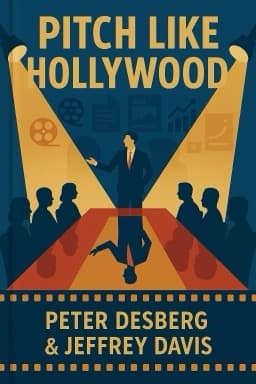
7 Hollywood Pitch Secrets That Will Transform Your Business (and Your Life!)
Unlock the storytelling magic and persuasion psychology behind every blockbuster pitch.

Unlock the storytelling magic and persuasion psychology behind every blockbuster pitch.
Imagine walking into a room and, within minutes, captivating everyone with your idea. That’s the power of a Hollywood pitch—an art honed in the world’s most competitive creative industry, now inspiring leaders and entrepreneurs everywhere. But what makes these pitches so irresistible? The answer lies in the perfect blend of narrative, psychology, and emotional connection.
At the core of every Hollywood pitch is a story. Stories are the original technology for transferring knowledge and emotions. They’re how we remember facts, empathize with others, and make decisions. In fact, research shows that when information is embedded in a narrative, it’s up to 50% more memorable. Hollywood execs, bombarded by thousands of ideas, remember the ones told as stories. This isn’t just chance—it’s neuroscience at work.
Secret #1: Start with a Hook That Sings
Every pitch begins with a hook—a short, punchy phrase that instantly grabs attention. Think of it as the movie trailer for your idea. It should be memorable, repeatable, and spark curiosity. For example, instead of pitching a generic health app, try: 'It can taste good AND be good for you.' The hook isn’t just an opener; it’s your brand in a nutshell.
Secret #2: The Logline—Your Elevator Pitch in One Sentence
The logline distills your idea into a single, compelling sentence. It introduces the protagonist, the antagonist, and the main conflict—without giving away the ending. This is the sentence that makes people lean in and ask, 'Tell me more.' The best loglines create anticipation and leave room for curiosity.
Secret #3: The Three-Act Structure—Setup, Conflict, Resolution
Hollywood pitches follow a timeless arc: Act I sets the scene, Act II escalates the stakes, and Act III delivers the resolution. This structure works because it mirrors the way our brains process stories. Even business presentations benefit from this rhythm—introduce the problem, show the struggle, and reveal your solution.
Secret #4: The Psychology of Persuasion
Most decisions are made intuitively, not rationally. This is called cognitive ease: when information feels familiar, it’s accepted quickly. Small details—like the weight of a clipboard or the warmth of your tone—can tip the scales. The best pitchers align their message with the listener’s worldview, making agreement feel natural.
Secret #5: Classic Persuasion Techniques—Foot-in-the-Door and Social Proof
Start with a small ask (like a sticker on a door), and people are more likely to agree to bigger requests later (like a billboard on their lawn). This is the foot-in-the-door technique. Social proof—showing that others have already said yes—is equally powerful. Testimonials, nodding heads, and visible support nudge people toward agreement.
Secret #6: Likability and Charisma—The Hidden Engines
People are more easily persuaded by those they like and trust. Likability is built in seconds—through warmth, authenticity, and a genuine smile. Charisma isn’t loudness; it’s energy, empathy, and presence. Self-effacing humor breaks the ice and builds rapport.
Secret #7: Adaptability—Read the Room, Cross Cultures
The best pitchers are chameleons, tailoring their approach to fit the audience, context, and culture. What works in one country might flop in another. Simple, vivid language and universal stories bridge gaps. Flexibility is your superpower.
In the end, Hollywood pitching is about more than business—it’s about connection, empathy, and courage. These tools will help you not just win deals, but build lasting relationships and inspire change in every corner of your life.
1
2
4
Want to explore more insights from this book?
Read the full book summary