
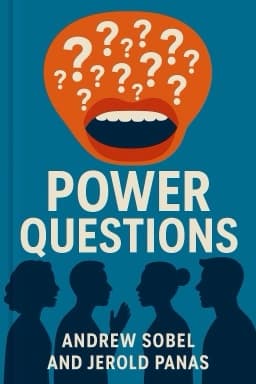
Unlock Your Potential: How Asking the Right Questions Can Change Everything
Discover the transformative power of questions and why mastering this art is your secret weapon for success.

Imagine a conversation where every question you ask opens new doors, invites deeper understanding, and builds lasting trust. This is not a fantasy but a skill that can be cultivated and mastered.
Throughout history, the great thinkers and leaders—from Socrates, who used questions to awaken minds, to Einstein, whose curiosity challenged the laws of physics—have demonstrated that asking the right questions is the key to discovery and innovation. Their legacy teaches us that the quality of our questions shapes the quality of our understanding and relationships.
In practical terms, mastering the art of questioning means learning to listen deeply and resist the urge to fill silences with unnecessary talk. The wisdom of seasoned professionals reminds us that
One of the simplest yet most potent questions you can ask is, 'What do you think?' These four words invite opinions, feelings, and ideas, signaling respect and fostering genuine engagement. People crave being heard, and by inviting their thoughts, you create a space for trust and collaboration.
But communication is not always smooth. Sometimes, conversations falter, misunderstandings arise, or tensions build. Here, the courage to say, 'Do you mind if we start over?' can reset the dialogue and open a path toward healing and renewed connection. Admitting mistakes and showing humility fosters authenticity and invites openness.
At the core of motivation and fulfillment lies the question of 'why.' Understanding your purpose and aligning your actions with it fuels passion, resilience, and meaningful impact. Leaders who connect their work to a clear why inspire their teams and navigate challenges more effectively.
Moreover, silence and reflection are not signs of weakness but gateways to deeper insight and personal healing. Allowing space for quiet contemplation encourages genuine sharing and reveals what truly matters beyond superficial achievements.
To push beyond limits, ask yourself and others, 'Is this the best you can do?' This relentless pursuit of excellence drives innovation and continuous improvement. Small gains, like shaving seconds off a computer’s boot time, can collectively save millions of hours, illustrating the profound impact of incremental progress.
Finally, clarity is essential. Avoid 'gorilla dust'—the confusion created by evasive or ambiguous answers—by asking direct, closed-ended questions that demand clear commitments. This approach ensures decisions are made and progress is achieved.
Embracing the art of questioning is embracing a new way of seeing the world and relating to others. It empowers you to lead with empathy, inspire with curiosity, and connect with authenticity. Start today by asking better questions and listening with an open heart.
By integrating these principles into your daily life, you unlock a powerful tool that transforms not only your conversations but your entire approach to challenges and opportunities.
References and further reading include insights from Warren Berger's 'A More Beautiful Question,' data storytelling approaches from Sam Knowles, and practical leadership techniques highlighted in top books on questioning and communication. 1 2 3
Want to explore more insights from this book?
Read the full book summary