
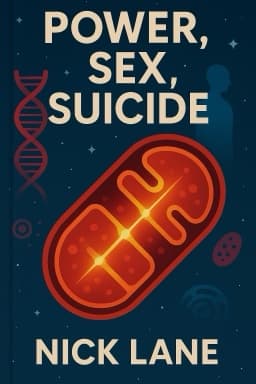
Unlocking Life's Secrets: How Mitochondria Shape Power, Sex, and Death
Discover the tiny organelles that wield immense influence over energy, reproduction, and aging.

Imagine a universe within every cell of your body, bustling with tiny powerhouses called mitochondria. These microscopic organelles are responsible for producing the energy currency, ATP, which powers everything from your heartbeat to your thoughts. But mitochondria are more than just energy factories; they are the architects behind some of life's most profound phenomena.
The story begins with the symbiotic origin of mitochondria, when an ancient bacterium merged with a host cell, setting the stage for the evolution of complex life. This event was not just a biological merger but a metabolic marriage, where hydrogen exchange between partners created a dependency that forever altered life's trajectory.
One of the most fascinating consequences of this partnership is the existence of two sexes. Unlike bacteria, which reproduce asexually, eukaryotic life evolved sexual reproduction to manage mitochondrial inheritance. Mitochondrial DNA is inherited almost exclusively from the mother, a strategy that prevents genetic conflicts and maintains cellular harmony. This uniparental inheritance gave rise to the differentiation of sexes, with one sex specializing in transmitting mitochondria and the other avoiding it.
Beyond reproduction, mitochondria also hold the key to understanding aging. As they produce energy, mitochondria leak reactive oxygen species—free radicals—that damage DNA and cellular components. This damage accumulates over time, impairing function and leading to cellular decline. Mitochondria also regulate programmed cell death, or apoptosis, balancing tissue renewal with degeneration.
Efforts to combat aging by using antioxidants have largely failed because free radicals also serve essential signaling roles. Modern research focuses on targeted therapies that reduce mitochondrial damage without disrupting these signals, aiming to extend healthspan rather than just lifespan.
The insights from mitochondria biology not only deepen our understanding of life's complexity but also open new avenues for medicine and biotechnology. From forensic science to fertility treatments, mitochondria continue to surprise us with their central role in health and disease.
As we reflect on mitochondria's journey—from ancient bacteria to the engines of power, sex, and suicide within our cells—we recognize the delicate balance of cooperation and conflict that shapes all living things. Their story is a testament to life's resilience and complexity, inviting us to explore the hidden forces that govern our existence.
Want to explore more insights from this book?
Read the full book summary