
10 Powerful Phrases That Instantly Diffuse Workplace Drama (and Why They Work)
Unlock the Secret Language of Professional Harmony

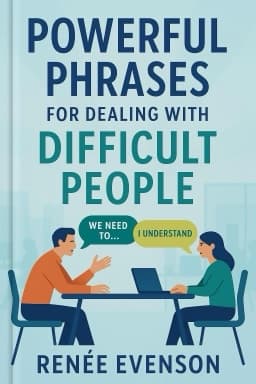
Every office has its share of tension—missed deadlines, clashing personalities, and the ever-present challenge of miscommunication. But what if you could turn those moments of friction into catalysts for trust and growth? Renée Evenson’s acclaimed book, Powerful Phrases for Dealing with Difficult People, offers a treasure trove of language tools that do just that. In this post, we’ll dive deep into the most effective scripts, why they work, and how you can use them to transform your workplace.
Why Words Matter More Than You Think
Research shows that the way we phrase our thoughts can dramatically change the outcome of any conversation. A simple shift from 'You always...' to 'I noticed...' can mean the difference between escalation and resolution. Evenson’s book is built on this principle, offering over 325 phrases designed for real workplace scenarios. These aren’t just polite words—they’re strategic, psychologically informed tools that help you:
- Reduce defensiveness
- Invite collaboration
- Build trust
- Turn conflict into growth
For example, starting with 'Help me understand your perspective' signals openness and respect, making it easier for the other person to share honestly without feeling attacked.
The Psychology Behind the Phrases
Why do these phrases work? It’s all about reducing emotional threat. When people feel heard and respected, their brains move out of 'fight or flight' and into a state where they can listen, reflect, and collaborate. Phrases like 'I feel concerned when...' or 'Can we talk about what happened?' shift the focus from blame to shared problem-solving. This approach is supported by workplace communication experts and is echoed in research on emotional intelligence and conflict resolution. 1 3
Practical Scripts for Real Situations
Let’s break down some of the most effective scripts from the book:
- When someone interrupts: 'I’d like to finish my thought, and then I’d love to hear yours.'
- When a coworker takes credit for your work: 'I noticed my contribution wasn’t mentioned. Can we clarify how credit is assigned?'
- When dealing with gossip: 'I prefer to focus on facts and solutions.'
- When facing a bully: 'I expect to be treated respectfully. Let’s keep this professional.'
Each of these phrases is designed to assert your needs without aggression, inviting the other person into a constructive dialogue.
Nonverbal Communication: The Unsung Hero
Words are powerful, but how you say them matters just as much. Open body language, steady eye contact, and a calm tone reinforce your message. Evenson recommends practicing in front of a mirror to ensure your nonverbal cues match your intent. 2
Making These Phrases a Habit
Like any skill, positive communication takes practice. Start by using these phrases in low-stakes situations, such as routine meetings or casual conversations. Over time, they’ll become second nature, and you’ll find yourself equipped to handle even the toughest workplace drama with grace.
Conclusion: Your Toolkit for Harmony
Imagine an office where misunderstandings are addressed with empathy, where feedback is given constructively, and where every conflict is an opportunity for growth. With the right phrases and a commitment to positive communication, that workplace can be yours. Try out these scripts, pay attention to your tone and body language, and watch as your professional relationships transform—one conversation at a time.
Ready to start? Choose one phrase today and see how it changes your next challenging interaction.
Want to explore more insights from this book?
Read the full book summary