
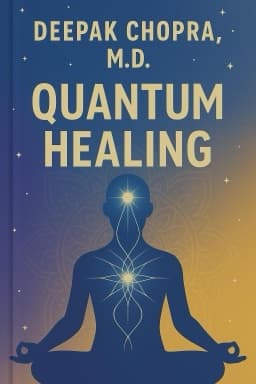
Is Quantum Healing Real? What Doctors and Critics Are Saying Now
Exploring the Science, Skepticism, and Surprising New Evidence

Few books have sparked as much debate as Deepak Chopra’s 'Quantum Healing.' On one side, believers hail it as a revolution in medicine; on the other, skeptics dismiss it as pseudoscience. So what’s the truth?
Chopra’s core claim is that consciousness operates at a quantum level, allowing the mind to influence physical health. Critics, including many physicists and doctors, argue that 'quantum' is misused—quantum physics describes subatomic particles, not thoughts and feelings. They point out that while the placebo effect and mind-body medicine are real, there’s little evidence for literal quantum events in healing.
But the story isn’t so simple. Recent research in neuroplasticity, epigenetics, and psychoneuroimmunology shows that the brain and body are more adaptable than once thought. Meditation can alter gene expression; beliefs can change brain chemistry; social support can speed recovery. These findings echo Chopra’s call to treat the whole person, not just symptoms.
The controversy boils down to language. Chopra’s metaphors may stretch scientific precision, but his practical advice—meditate, eat well, manage stress, cultivate hope—aligns with what many doctors now recommend. The future of medicine may not be quantum in the strictest sense, but it is holistic, integrative, and deeply personal.
If you’re curious, read the book with an open but critical mind. The truth, as always, may lie somewhere in between.
References: Deepak Chopra, 'Quantum Healing'; Goodreads; SoBrief.com; Tales.so
Want to explore more insights from this book?
Read the full book summary