
The Hidden Psychology of Helping and Cheating: What Makes Us Kind or Crooked?
Discover the surprising factors that drive honesty and altruism, including similarity, religion, and urban living’s impact.

Altruism and honesty are cornerstones of human society, but their expression depends on many subtle factors. Research shows that people are more likely to help those who resemble them, such as sharing birthdays or political views. This in-group bias reflects evolutionary drives to support kin and community members.
Religion often promotes generosity, with religious individuals donating more and helping others more frequently. However, some conservative religious groups have been found less generous in subtle ways. For instance, clergy honesty tests reveal no moral superiority compared to other groups, challenging assumptions about faith and ethics.
Urban living presents challenges to altruism. Studies across cities worldwide find that as population density and pace increase, helping behavior decreases. Faster walking speeds and sensory overload reduce attention to others’ needs. Experiments like the abandoned car study show that cars left unattended in small towns receive more help than in busy cities.
Understanding these influences helps us foster kindness by promoting social connection, reducing stress, and encouraging empathy in urban environments.
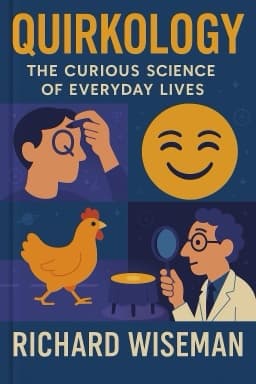
Sources: Blinkist summary of Quirkology, Customer Thermometer review, Goodreads insights, 5 Minute Book Summary 1 2 3 4
Want to explore more insights from this book?
Read the full book summary