
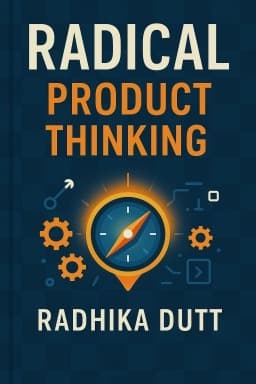
Unlocking the Secret to Game-Changing Products: Why Radical Product Thinking Will Transform Your Innovation Strategy
Discover how a visionary mindset combined with practical frameworks can help you build products that don’t just compete but change the world.

In today’s fast-paced technology landscape, countless products flood the market daily, yet only a few truly change the way we live and work. What separates these visionary successes from the rest? The answer lies in a mindset called Radical Product Thinking. This approach is a clarion call to all innovators: build products with a clear vision of change, grounded in validated problems, and executed with purpose.
The foundation of Radical Product Thinking is the power of vision. Unlike vague slogans or lofty aspirations, a solid vision is a detailed blueprint that answers: Who are we trying to help? What problem do they face? Why is the status quo unacceptable? And how will we know when we’ve succeeded? This vision acts as a compass, ensuring every decision aligns with the desired change. For example, a community cooperative empowering thousands of women through sustainable self-employment illustrates how a deeply meaningful vision can unite and drive collective action.
But vision alone is not enough. Translating this vision into reality requires a robust strategy — a bridge that connects aspirations to actionable plans. Radical Product Thinking introduces the RDCL framework, focusing on Real pain points, Design, Capabilities, and Logistics. This framework ensures that product teams build solutions that users truly value, supported by the necessary assets and delivered effectively. For instance, microcredit’s mixed outcomes highlight the pitfalls of unvalidated assumptions and the importance of aligning strategy with real user needs.
Prioritization is the next critical step. Balancing long-term vision with the urgent need to survive is a delicate art. The Vision Fit vs Survival Risk matrix helps teams categorize initiatives, manage 'vision debt,' and make transparent trade-offs. This empowers autonomy and fosters alignment, vital for navigating the complex realities of product development.
Execution guided by hypothesis-driven experiments and meaningful metrics turns plans into learning. Moving beyond vanity metrics to outcome-focused measurements ensures teams stay aligned with their vision. Traditional goal-setting pitfalls are avoided by fostering psychological safety and continuous feedback, creating a culture of learning and adaptation.
Speaking of culture, Radical Product Thinking emphasizes its foundational role. Understanding cultural quadrants — from Meaningful Work to Soul-Sucking tasks — helps leaders foster environments where intrinsic motivation thrives. Psychological safety and inclusion are highlighted as essential elements for innovation and sustained engagement.
Beyond internal factors, the approach calls attention to digital pollution — the unintended societal and environmental harms of technology products. Ethical product design, transparency, and sustainability become imperatives for creators who wish to build responsibly.
Ultimately, Radical Product Thinking is an invitation to lead with purpose and ethics. It insists that anyone can become a visionary innovator by adopting this mindset, contributing to a collective impact that shapes a better future.
This holistic framework, rich with real-world examples and actionable insights, offers a roadmap for those ready to transform their product development journey into one of meaningful change.
For more detailed explorations of each aspect of Radical Product Thinking, continue exploring our blog series.
Want to explore more insights from this book?
Read the full book summary