
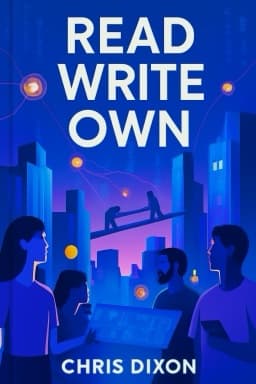
Why the Next Internet Will Belong to You: The Hidden Revolution Behind 'Read Write Own'
How Chris Dixon’s Vision for a User-Owned Internet Could Change Everything About the Way You Live and Work Online
How Chris Dixon’s Vision for a User-Owned Internet Could Change Everything
Imagine logging onto the internet and knowing that every post, every creation, every connection you make is truly yours. Not owned by a tech giant, not subject to sudden rule changes or hidden algorithms, but governed by transparent rules and shared with a community you help shape. This is the world Chris Dixon envisions in 'Read Write Own,' and it’s closer than you might think.
Dixon’s journey starts with the birth of the internet—a place where anyone could build a website, launch a business, or connect with others using open protocols like email and the web. These early networks were like public parks: open, accessible, and full of possibility. But as the internet matured, powerful corporations built walled gardens, drawing users in with free tools and then locking them in. Platforms like Facebook, Instagram, and YouTube extract nearly all the value created by their communities, leaving creators and users with little control or reward.
Enter blockchain and Web3. Dixon explains that blockchains are not just databases, but programmable computers that can make and keep promises. Through smart contracts, tokens, and decentralized governance, they allow for true digital ownership and community-driven innovation. NFTs let artists and musicians sell their work directly to fans, DeFi platforms enable anyone to lend or borrow without a bank, and DAOs empower communities to make decisions together, transparently and fairly.
But the road ahead isn’t without challenges. Regulation remains uncertain in many countries, security breaches have cost billions, and user experience is still too complex for many newcomers. Dixon argues that these hurdles are surmountable—and that the rewards are worth the effort. The internet’s next era, he insists, will be built by communities, not corporations, and anyone can play a part.
So, how can you get involved? Whether you’re a coder, an artist, a teacher, or just curious, there are countless ways to participate. Join a DAO, collect an NFT, contribute to an open-source project, or simply start learning. The future is being written now, and Dixon’s book is both a roadmap and a rallying cry for anyone who wants to help build it.
Ready to own your piece of the web?
Sources: 2 4
Want to explore more insights from this book?
Read the full book summary