
Unlocking Your Brain’s Hidden Superpower: The Science of Deep Reading
Discover how reading rewires your brain to boost attention, empathy, and creativity — and why it matters more than ever.

Imagine the first time you learned to read. Unlike spoken language, reading is a cultural invention that requires your brain to undergo a remarkable transformation.
Deep reading is a complex act involving multiple brain regions working in concert. The visual cortex decodes letters and words, the language centers map these onto sounds and meanings, while the cognitive areas integrate context and prediction. Meanwhile, motor regions subtly simulate actions described in text, and affective centers evoke emotional responses.
For example, when you read a novel, your brain doesn’t just process words; it conjures vivid mental images, empathizes with characters, and weaves background knowledge into the story. This co-creation between reader and author enriches comprehension and emotional depth, fostering empathy and social understanding.
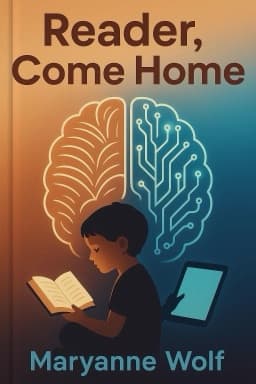
However, the rise of digital media poses challenges to these cognitive treasures. Screen reading often encourages rapid skimming and multitasking, fragmenting attention and reducing patience for sustained focus. Notifications and constant distractions impair working memory, undermining deep processing and altering brain circuits, especially in children.
To nurture resilient readers, especially young ones, shared print reading remains vital. Physical books engage multiple senses and support joint attention, building foundational language and emotional skills. Gradual, balanced introduction of digital media complements rather than replaces these experiences, fostering biliteracy and cognitive flexibility.
Ultimately, deep reading sustains not only individual growth but the health of democracy itself. It cultivates critical thought and empathy, enabling citizens to navigate complex societal issues with openness and wisdom. The loss of deep reading risks social fragmentation and intolerance. Yet, as conscious stewards of our cognitive futures, we can choose to preserve and promote the contemplative dimensions of reading that nourish our humanity.
Reclaiming deep reading is a call to slow down, reflect, and engage fully with the written word—a timeless superpower in an ever-accelerating world.
By understanding and embracing this science, you empower yourself to harness reading’s full potential—for knowledge, empathy, creativity, and beyond.
Want to explore more insights from this book?
Read the full book summary