
Why Your Brain's Problem Focus Is Killing Your Success (And How to Flip the Switch)
Uncover the hidden mental trap sabotaging your goals and the science-backed method to reclaim your focus.

Have you noticed how your mind often fixates on what’s going wrong, replaying worries over and over? This isn’t just a bad habit—it’s a deeply embedded biological pattern called problem-centric thought (PCT). Our brains evolved to prioritize threats for survival, but in today’s world, this tendency can sabotage your happiness, health, and success.
Research reveals that humans experience tens of thousands of thoughts daily, with up to 80% being negative or problem-focused. Most of these negative thoughts never materialize, yet they flood your brain with cortisol, the stress hormone that impairs memory, creativity, and immune function.
Consider the analogy of a roof slowly leaking due to constant dripping water. Problem-centric thought is that drip, eroding your mental resilience day by day. Without recognizing this pattern, you remain trapped, unable to focus on solutions or move forward.
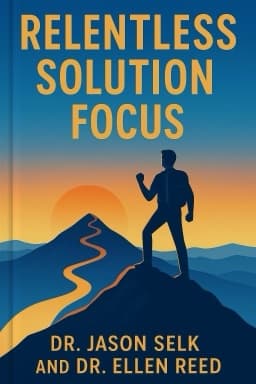
The good news is that awareness is the first step to change. By learning to identify problem-centric thought, you can interrupt it and redirect your focus. The Relentless Solution Focus method trains you to do exactly that—within 60 seconds, you replace a problem thought with a solution-oriented question and action.
This shift has profound biological effects. Stopping cortisol release and triggering serotonin and dopamine production improves mood, sharpens thinking, and increases motivation. The brain literally rewires itself with consistent practice, making solution focus your default mode.
Stories of athletes, leaders, and everyday people who mastered this mental switch highlight its transformative power. One athlete overcame choking under pressure by training his mind to find solutions immediately after mistakes, turning setbacks into comebacks.
Sources: Concepts and evidence synthesized from Blinkist summaries, Forbes articles, and Amazon reviews. 1 3 4
Want to explore more insights from this book?
Read the full book summary