
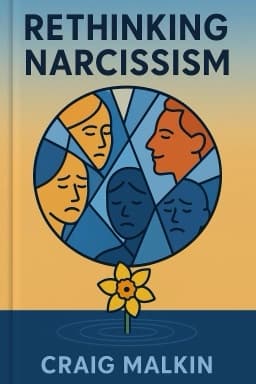
Unlocking the Secret Spectrum: Why Narcissism Isn’t Always What You Think
Discover the surprising truth about narcissism—and how it shapes your relationships, success, and happiness.

When you think of narcissism, what comes to mind? Perhaps it’s a celebrity obsessed with their own reflection, or a manipulative boss who takes credit for your work. But what if you learned that narcissism isn’t just about arrogance or self-obsession? In fact, it’s a deeply human quality—one that, in the right measure, can be the key to resilience, happiness, and even love.
Narcissism as a Spectrum
Dr. Craig Malkin, a Harvard Medical School psychologist, shatters the myth that narcissism is simply a personality disorder. In his acclaimed book, Rethinking Narcissism, he explains that narcissism is a spectrum, ranging from echoism (people who fear standing out and avoid praise) to healthy self-regard and, at the far end, pathological narcissism. Most people fall somewhere in the middle, and where you land can change throughout your life.
Why We All Need to Feel Special
It turns out, the drive to feel special is universal. Studies show that most people rate themselves as above average on traits like kindness and intelligence—a phenomenon called the 'better-than-average effect.' This isn’t just vanity; it’s a natural boost that helps us recover from setbacks and pursue our dreams. Healthy narcissism fuels ambition, creativity, and the courage to try new things.
The Roots: Parenting, Culture, and Echoism
How do we develop our sense of self-worth? Malkin points to a blend of genetics, parenting, and culture. Children need 'mirroring'—parents who pay attention to their inner lives, not just their achievements. Too much praise without real connection can be as damaging as neglect. In some families, one child may grow up to be a performer, while another becomes an echoist, shrinking from attention and struggling to express needs.
Faces in the Mirror: Real-Life Examples
From shy echoists who avoid praise to healthy narcissists who balance ambition with empathy, and grandiose personalities who crave the spotlight, the spectrum is everywhere. Even the most humble among us have moments of pride, and the proudest have moments of doubt. Life events—success, illness, love—can move us along the spectrum.
Social Media: The Double-Edged Sword
In today’s digital world, social media can amplify both healthy and unhealthy narcissism. Platforms like Instagram and Facebook offer connection and validation, but also fuel comparison and insecurity. Used mindfully, they can boost self-esteem; used for constant validation, they can deepen loneliness and envy.
Recognizing Red Flags
Unhealthy narcissists may dominate conversations, avoid vulnerability, and manipulate those around them. But not all are obvious—some are quiet, charming, or even seem empathetic. Setting boundaries and practicing self-care are crucial for those in relationships with narcissists.
How to Cultivate Healthy Narcissism
The sweet spot is in the middle of the spectrum. Healthy narcissists accept praise with gratitude, admit faults without shame, and inspire others. Parents and mentors can foster this by mirroring feelings and providing realistic praise. Adults can build self-esteem by practicing self-compassion, setting boundaries, and seeking authentic connections.
The Hopeful Future
Understanding the spectrum of narcissism can transform not just individuals, but families and communities. When we nurture both ambition and empathy, we create spaces where everyone can thrive. The journey to balance is ongoing, but with awareness and support, healing is always possible.
If you’re ready to rethink what it means to feel special, and want to build deeper, more fulfilling relationships, this is the book—and the journey—for you.
Want to explore more insights from this book?
Read the full book summary