
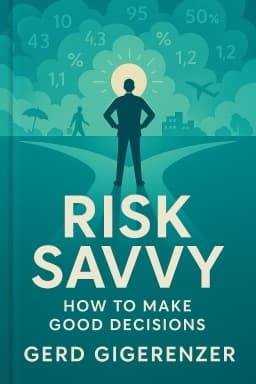
Simple Rules, Smarter Lives: How Heuristics Can Outsmart Complex Algorithms
Why Sometimes Knowing Less Leads to Better Choices

Why Sometimes Knowing Less Leads to Better Choices
Imagine you’re an outfielder in a baseball game. The ball soars high, and there’s no time to calculate its trajectory. What do you do? You use a simple rule: keep the angle of your gaze constant and run. This is the gaze heuristic—a powerful mental shortcut that helps athletes, pilots, and even animals make split-second decisions.
Heuristics aren’t just for sports. In finance, investors who focus on a few key cues often outperform those who drown in data. Studies show that people who know less about certain topics can sometimes make more accurate predictions than experts, thanks to the ‘less is more’ effect. By ignoring irrelevant or misleading information, we can cut through the noise and focus on what really matters.
Even doctors and business leaders rely on simple rules. When time is short and stakes are high, the mind falls back on tested heuristics—rules of thumb that have stood the test of time. The art is in knowing which rule to use and when.
So, how can you harness the power of heuristics in your own life? Start by identifying the key cues that matter most in your decisions. Test your rules, refine them, and don’t be afraid to ignore irrelevant details. In a world of uncertainty, simple rules offer clarity, speed, and surprising accuracy. Sometimes, less truly is more.
Want to explore more insights from this book?
Read the full book summary