
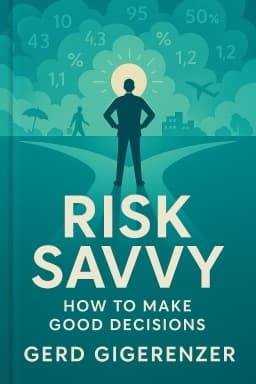
The Illusion of Certainty: Why Chasing Guarantees Can Cost You
How Letting Go of Guarantees Can Make You Happier and Wiser

How Letting Go of Guarantees Can Make You Happier and Wiser
Certainty is seductive. We buy insurance, take medical tests, and trust experts, all in the hope that they can offer us a guarantee about the future. But the truth is, certainty is an illusion—and chasing it can leave us more vulnerable than we realize. Think of the DNA test that seems infallible, or the fingerprint match that seals a conviction. Both have error rates, and history is filled with stories of false positives and ruined lives.
Our longing for certainty isn’t just personal—it’s cultural. We want to believe that more data means more clarity, but sometimes it just deepens the fog. The ‘turkey illusion’ is a perfect example: a turkey fed every day becomes more certain it will be fed tomorrow—right up until Thanksgiving. We are all turkeys when we mistake regularity for safety.
Even in health, the numbers can deceive. A positive test for a rare disease might still mean you’re healthy, because false positives are common. Yet, most of us—and even many doctors—fail to grasp this, leading to unnecessary treatments, anxiety, and wasted resources.
So, what’s the alternative? Embrace uncertainty. Instead of demanding guarantees, ask better questions: What’s the chance of error? What don’t I know? What’s the real, absolute risk? By accepting that some things will always be unknown, we become more adaptable, less anxious, and better decision-makers. The world is uncertain, but that doesn’t mean we’re powerless. In fact, it’s precisely in the unknown that we find freedom and resilience.
Want to explore more insights from this book?
Read the full book summary