
The Secret Playbook: How Food Giants Engineered Our Cravings
Unveiling the Hidden Science and Corporate Tactics Behind Every Bite

Unveiling the Hidden Science and Corporate Tactics Behind Every Bite
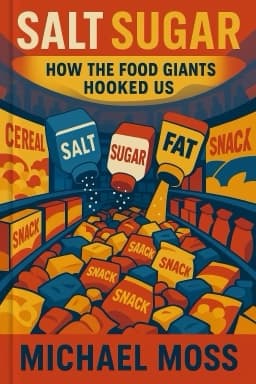
Imagine a world where every bite you take is the result of years of research, psychological manipulation, and billion-dollar marketing budgets. This isn’t science fiction—it’s the reality of today’s processed food industry, as revealed in Michael Moss’s eye-opening book, Salt Sugar Fat. The story begins in a high-rise boardroom, where the CEOs of America’s largest food companies once gathered in secret, not to discuss profits, but to confront the growing health crisis their products had helped create. They knew the truth: their relentless pursuit of the 'bliss point'—the perfect combination of salt, sugar, and fat—was hooking millions of consumers and reshaping the global diet.
The science behind your cravings is both fascinating and chilling. Food engineers use mathematical models and thousands of taste tests to pinpoint the exact amount of sugar or salt that will light up your brain’s pleasure centers. This 'bliss point' isn’t just about taste—it’s about maximizing desire and minimizing satiety, so you keep reaching for more. Children are especially vulnerable, as their natural preference for sweetness is exploited by products designed to build lifelong loyalty.
But the manipulation doesn’t stop at the lab. The marketing machine is relentless. Mascots, cartoons, and catchy jingles are crafted to capture children’s imaginations, while supermarket shelves are engineered to make processed foods irresistible at every turn. Billions are spent each year to ensure that, whether you’re at home, at school, or online, you’re never far from temptation.
The consequences are staggering: obesity rates have soared, type 2 diabetes has become common among children, and chronic diseases linked to diet are now global epidemics. Yet, as Moss and other experts reveal, the industry’s response has been slow and often superficial, with reformulation efforts frequently undermined by the need to maintain taste and profit.
Despite these challenges, hope is not lost. Grassroots movements, public health advocacy, and consumer demand for transparency are beginning to shift the landscape. Community gardens, farm-to-school programs, and a revival of home cooking are empowering individuals and families to take control of their health. Even some food giants are responding, rolling out healthier product lines in response to mounting pressure.
The battle for our health is ongoing, but knowledge is power. By understanding the tactics used to engineer our cravings, we can make more mindful choices and demand a food system that nourishes rather than exploits. The next time you reach for a snack, remember: you’re not just eating—you’re participating in a story decades in the making.
Want to explore more insights from this book?
Read the full book summary