
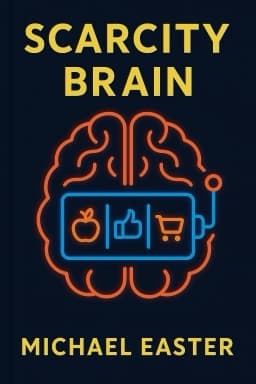
Hooked on Uncertainty: How Dopamine Hijacks Your Life and What You Can Do About It
Unravel the science of dopamine-driven cravings and learn practical strategies to break free from addictive cycles.

Dopamine: The Motivator Behind Craving
Dopamine is often mischaracterized as simply the brain’s pleasure chemical. In reality, its primary role is to drive anticipation and motivation, especially when rewards are uncertain. Studies with animals reveal a preference for variable, unpredictable rewards over certain ones, even if the latter yield more consistent benefits.
Technology’s Exploitation of Scarcity Brain
Modern technologies are designed to exploit dopamine-driven scarcity loops. Infinite scroll, push notifications, flash sales, and gamification all create unpredictable reward patterns that hook users. Mobile gambling has exploded due to rapid repeatability and easy access. Advertising increasingly uses variable rewards and emotional storytelling to capture attention and drive purchases. Recognizing these design choices is crucial to develop healthier digital habits.
Understanding Addiction Beyond the Brain
Addiction is a complex behavior shaped by environment, choice, and brain chemistry. Animal studies show that enriched environments reduce addiction-like behaviors, highlighting the role of context. Most people recover from addiction naturally or with support, challenging the notion of addiction as a permanent disease.
Practical Steps to Break the Cycle
Breaking dopamine-driven scarcity loops requires awareness and intentional change. Strategies include dopamine fasting, reducing exposure to unpredictable rewards, cultivating mindfulness, and replacing compulsive behaviors with meaningful activities. Setting boundaries with technology and seeking social support enhances recovery.
Want to explore more insights from this book?
Read the full book summary