
Inside the Soviet Collapse: How a Superpower’s Fall Shaped the Modern World
Explore the dramatic fall of the Soviet Union and its profound impact on global politics, society, and identity.

The dissolution of the Soviet Union in 1991 marked a seismic shift in global politics, ending the Cold War era and reshaping the geopolitical landscape. This transformation was not just political but deeply social and cultural, affecting millions of lives across the former Soviet republics. The collapse was precipitated by decades of systemic issues, including economic stagnation, political rigidity, and a growing desire for freedom among the populace.
The August Putsch of 1991 was a critical moment when hardline communists attempted a coup to reverse reforms initiated by Mikhail Gorbachev. The public's massive resistance, led symbolically by Boris Yeltsin standing atop a tank, demonstrated the people's yearning for change. However, the aftermath was chaotic, with rapid economic reforms known as shock therapy leading to hyperinflation and social dislocation. Many people lost their savings overnight, and the safety nets of the Soviet planned economy vanished, plunging millions into poverty.
Privatization efforts created a new class of oligarchs who amassed vast wealth quickly, exacerbating social inequalities and fueling resentment. The rise of capitalism introduced new values focused on consumerism and individual success, often clashing with the collective ideals of the Soviet past.
Yet, the human cost went beyond economics. The trauma of repression, family separations, and the psychological scars of decades of authoritarian rule permeated society. Alcoholism became a widespread coping mechanism, reflecting deeper wounds. Despite this, stories of resilience and cultural survival emerged, with kitchens and private spaces becoming sanctuaries for dissent and preservation of memory.
Looking forward, the legacy of the Soviet collapse continues to influence Russia’s political landscape, where power remains highly centralized, and media control limits dissent. Youth movements echo Soviet-era structures, fostering loyalty to the state while suppressing opposition. Meanwhile, nostalgia for the Soviet past persists, especially among younger generations seeking identity and stability in a rapidly changing world.
This complex history teaches us about the fragility of political systems, the resilience of human spirit, and the enduring power of memory and identity.
For further reading on the broader consequences of the Soviet collapse, see the resources at Norwich University and Social Studies Help, which provide detailed historical context and analysis. 1 2
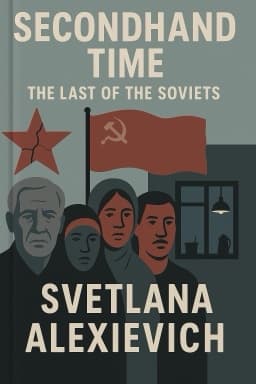
Want to explore more insights from this book?
Read the full book summary