
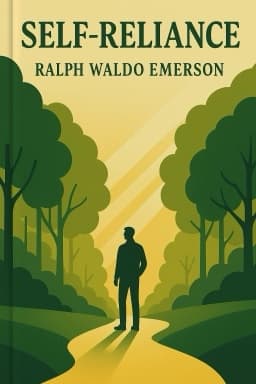
The Ethics of Authenticity: How Emerson’s Ideas Shape Modern Happiness
Finding Joy and Fulfillment Through Self-Reliance

Finding Joy and Fulfillment Through Self-Reliance
In a world obsessed with likes, followers, and fitting in, Emerson’s 'Self-Reliance' offers a refreshing, even radical, alternative: happiness is found not in the approval of others, but in the quiet certainty of living authentically. The Ethics of Authenticity, as modern philosophers call it, is about more than self-expression—it’s about moral courage and self-acceptance. Emerson believed that every person possesses a unique voice, a spark of intuition that, if trusted, leads to true joy. 1
Living authentically begins with listening to your inner wisdom. Emerson called this 'primary wisdom'—the kind of knowing that doesn’t come from books, but from direct experience. By tuning out the noise of comparison and expectation, you make space for your own ideas to blossom. Modern psychology supports this, showing that self-acceptance is key to emotional stability and creativity.
But authenticity isn’t always easy. It requires letting go of the need to please everyone, and sometimes, the courage to stand alone. Emerson’s advice? Embrace solitude as a source of strength, not loneliness. In solitude, you reconnect with your values and passions, free from the pressures of conformity.
Practical steps for living authentically include daily reflection, mindful presence, and small acts of courage—like speaking your truth in a meeting or pursuing a project that excites you, even if others don’t understand. Over time, these practices build confidence and fulfillment, leading to a life that feels genuinely your own. 3
Ultimately, the Ethics of Authenticity is not about selfishness, but about bringing your best self to the world. When you are true to yourself, you inspire others to do the same, creating a ripple effect of happiness and creativity. Emerson’s wisdom is a timeless guide for anyone seeking joy in an often inauthentic world.
Want to explore more insights from this book?
Read the full book summary