
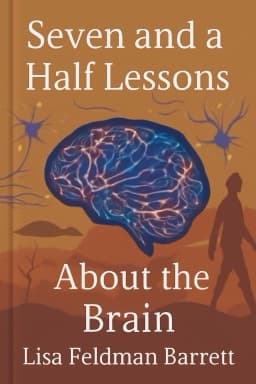
The Brain Is Not Divided: Why Thinking in 'Three Brains' Is Wrong and What Really Happens Inside Your Head
Forget the old 'reptilian brain' myth — discover how your brain truly functions as a dynamic, interconnected network.

For decades, the popular idea of the brain has been shaped by the myth of the 'triune brain' — three separate layers fighting for control. But modern neuroscience tells a very different story. Your brain is a single, integrated network, not isolated modules.
Within this vast network, clusters of neurons serve as hubs, connecting distant brain regions like major airports. These hubs facilitate efficient communication, balancing speed and energy use. Damage to these hubs can cause serious neurological disorders, highlighting their importance.
Neurons themselves are not one-trick ponies. Thanks to degeneracy, a single neuron can participate in vision, memory, emotion, or decision-making depending on context. This flexibility allows the brain to adapt, recover from injury, and produce the diverse mental experiences that define humanity.
The brain’s complexity arises from the enormous variety of neural activity patterns it can generate. Unlike simple layered models, this network continuously reconfigures itself, strengthening or weakening connections based on experience.
Understanding the brain as a network reshapes how we think about rationality, emotion, and consciousness. Mental functions emerge from interactions across the network rather than residing in isolated brain parts. This integrated view invites a more nuanced appreciation of the human mind.
For deeper insights, explore MIT Press’s work on brain networks, Yale’s studies on brain evolution, and Elsevier’s research on functional connectivity and lateralization of the human cerebral cortex. 2 1 4
Want to explore more insights from this book?
Read the full book summary