
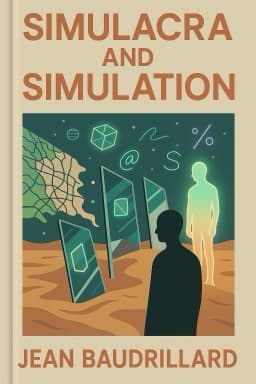
The Quiet Death of Meaning: How Media Implodes Reality
An in-depth look at how media saturation leads to the collapse of meaning and transforms social life.

In an age dominated by constant connectivity and information overload, the way we communicate and understand the world has fundamentally changed. Jean Baudrillard’s concept of the implosion of meaning offers a powerful lens to understand this transformation. Rather than clarifying or deepening meaning, the flood of media information overwhelms and neutralizes it, creating a cultural and social implosion.
Information as Entropy
Baudrillard argues that information does not simply convey content but acts like entropy, devouring its own meaning. The endless stream of data, images, and messages saturates our environment, creating noise and confusion. This saturation leads to a paradox: the more information circulates, the less meaningful it becomes.
Media as Simulation Machines
Media outlets stage communication, producing simulations rather than authentic exchanges. News cycles, social media posts, and entertainment blur into a continuous spectacle where genuine dialogue is replaced by signs that refer only to other signs.
Consequences for Culture and Politics
This implosion of meaning has profound consequences. Cultural identity becomes fragmented, political engagement dissipates into spectacle, and social bonds weaken. The saturation of media creates a hyperreal environment where distinctions between reality and representation collapse.
Navigating the Hyperreal
Understanding this implosion invites us to develop critical awareness of media’s role in shaping perception. By recognizing the simulation and spectacle, individuals can seek authentic connections and resist the passive consumption that defines the hyperreal condition.
Want to explore more insights from this book?
Read the full book summary