
Why Disneyland Is the Perfect Metaphor for Our Fake Reality
How a theme park reveals the illusions underpinning modern life and the disappearance of authentic experience.

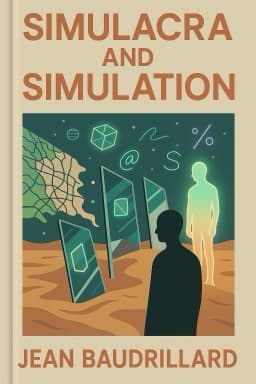
At first glance, Disneyland appears to be a simple amusement park—a place of joy, fantasy, and childhood wonder. However, beneath this colorful facade lies a profound philosophical metaphor that reveals the nature of our contemporary reality. Jean Baudrillard, in his work on simulacra and simulation, uses Disneyland as a powerful example of hyperreality, a place that is designed to seem imaginary but actually masks that the broader reality around it is itself a simulation.
Disneyland: An Imaginary Space Masking a Hyperreal World
Disneyland is meticulously crafted to evoke nostalgia and innocence. Every detail—from the castle to the costumes—recycles childhood fantasies, creating a space where adults are invited to regress into a state of playful innocence.
The Surrounding Reality as Disneyland
Baudrillard provocatively claims that the rest of America is Disneyland—that the urban sprawl, consumer culture, and media saturation outside the park are themselves simulations. The park’s imaginary space functions to convince visitors that the outside world is real, even though it is a hyperreal construct. This paradox highlights how consumer culture and media create layers of simulations that replace direct experience.
Recycling Childhood Fantasies
By continually reusing familiar symbols and narratives from childhood, hyperreal spaces like Disneyland maintain a comforting illusion. This process masks the erosion of genuine social bonds and authentic experience. Adults become participants in a shared fantasy that deters critical awareness of the hyperreal condition.
Media and the Imaginary
Media plays a complementary role by saturating society with signs and images that simulate reality. Television shows, advertisements, and social media recycle and amplify these fantasies, embedding them deeply into cultural consciousness.
Understanding Disneyland as a metaphor invites us to question our relationship with reality and the media we consume. It challenges us to seek authenticity in a world increasingly defined by simulation and spectacle.
Want to explore more insights from this book?
Read the full book summary