
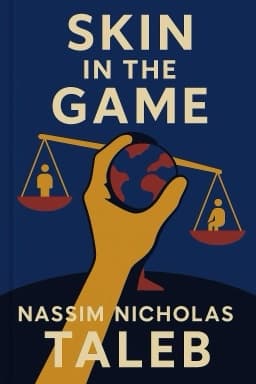
The Hidden Danger of ‘Cheap Talk’: Why Skin in the Game Matters More Than Ever
How ignoring personal risk in decision-making corrupts advice, leadership, and trust.

Have you ever received advice that sounds good but ends up harming you? This is the agency problem in action—when the advisor benefits regardless of your outcome, creating a dangerous misalignment of interests. Nassim Taleb’s 'Skin in the Game' sheds light on this pervasive issue, revealing why true accountability requires shared risk.
In many domains, from financial advising to politics, agents make decisions that benefit themselves while shifting risks onto principals. This leads to moral hazard, where the cost of failure is borne by others, eroding trust and fairness.
Interestingly, Islamic finance addresses this by forbidding gharar—transactions with excessive uncertainty or deception—ensuring both parties share equal risk and information. This ancient principle enforces transparency and ethical dealings, reducing exploitation.
But legal rules alone are insufficient. Taleb emphasizes maximal disclosure of intentions and risks to prevent shame and conflict. When advisors have skin in the game, their advice carries weight and responsibility, fostering trust and sustainable relationships.
Understanding this dynamic empowers you to recognize cheap talk and demand accountability. It highlights why leaders and advisors must share consequences to maintain legitimacy and why transparency is not just a virtue but a necessity.
In a world rife with asymmetric information and hidden risks, skin in the game is the antidote to exploitation and the foundation of ethical decision-making.
References: 2 , 3 , 4
Want to explore more insights from this book?
Read the full book summary