
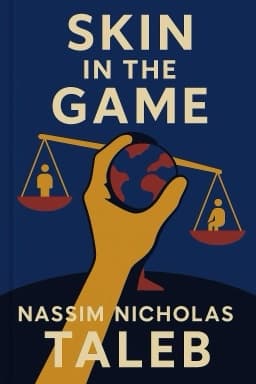
Why 'Skin in the Game' is the Ultimate Rule for Fairness and Success — Are You Playing by It?
Discover how personal risk shapes justice, ethics, and success in every aspect of life.

Imagine a world where everyone who makes decisions also faces the consequences of those decisions. This is not just an idealistic dream but the core of what Nassim Nicholas Taleb calls 'Skin in the Game.' This principle, deeply rooted in ancient legal codes like Hammurabi’s, insists that fairness and justice demand personal risk. When those who benefit from rewards also share the pain of losses, society functions more ethically and sustainably.
Taleb’s argument cuts through modern complexities, highlighting how many systems today allow people to gain without risk, creating dangerous asymmetries. For example, financial advisors who profit regardless of client losses or politicians insulated from the fallout of their policies violate this principle, leading to moral hazard and systemic fragility.
Understanding skin in the game helps us discern genuine advice from cheap talk. True advice comes from those willing to risk their own resources, reputation, or well-being. This principle applies beyond finance to social interactions, politics, and even religion, where costly rituals signify true commitment.
Ignoring skin in the game leads to exploitation and instability. Taleb warns that when risks are hidden or shifted away, failures become catastrophic. By embracing this ancient wisdom, we can build more resilient systems, foster trust, and promote fairness.
In essence, skin in the game is about aligning incentives with responsibility. It is a call to live with integrity, ensuring that our actions and decisions carry consequences we are willing to bear. This principle is not just ethical but practical, offering a roadmap to navigate complex social and economic landscapes with honesty and courage.
Are you ready to put skin in the game and demand it from others? Understanding this principle is the first step toward fairness, trust, and survival in an unpredictable world.
References: 1 , 2 , 3
Want to explore more insights from this book?
Read the full book summary