
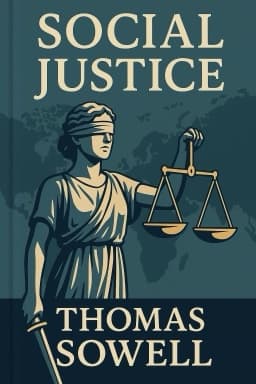
Unmasking Social Justice Myths: What They Don't Tell You About Equality and Freedom
Discover the hidden truths behind social justice claims and why equality is more complex than you think.

Introduction: The Illusion of a Level Playing Field
We often hear that society should offer everyone an equal chance, yet the reality is far more nuanced. Imagine a basketball court where players come from vastly different backgrounds, climates, and cultures—some have ice-skating skills nurtured by frozen lakes, others have brewing traditions passed down for centuries. These differing starting points mean equal opportunity is not a simple equalizer.
The Roots of Inequality: Geography, History, and Culture
Geographical factors like climate influence skill development, such as why Canadians and Swedes dominate professional hockey. Historical legacies, like German beer brewing dating back to Roman times, create specialized expertise that persists through generations. These facts challenge the idea that inequality is solely due to discrimination or lack of effort.
Furthermore, economic disparities exist within racial groups that often exceed disparities between them. For example, white Appalachian counties experience poverty levels comparable to or worse than many black communities, highlighting the role of environment and family structure over simplistic racial narratives.
Human Agency: Why People Aren't Chess Pieces
Policies often assume people will react predictably, but history tells a different story. Tax hikes sometimes reduce government revenue because wealthy individuals change behaviors, and minimum wage laws can increase youth unemployment by pricing out inexperienced workers. People adapt, resist, and innovate, defying simplistic social engineering.
The Distributed Nature of Knowledge
No single planner can possess the vast, dispersed knowledge embedded in society. The humble pencil, for instance, is made from materials sourced worldwide, coordinated through markets rather than central design. Immigrant communities rely on localized, tacit knowledge to settle and thrive, illustrating the limits of top-down control.
The Risks of Overreaching Social Justice
Natural inequalities rooted in geography and history persist despite policies. Attempts to enforce perfect equality through government power risk authoritarianism and loss of freedom. Balancing justice with liberty requires humility and respect for complexity.
The Power and Pitfalls of Language
Language shapes perception. Words like 'merit' and 'racism' carry multiple meanings, influencing debates and policies. Simplified narratives can mobilize support but also obscure facts, underscoring the need for clear communication and critical thinking.
Conclusion: Toward a Society of Freedom and Responsibility
True social justice balances individual liberty with accountability. Utopian ideals must be tempered by practical realities to avoid harm. Empowering individuals while respecting freedom creates opportunities for growth and healing.
By embracing these insights, we can move beyond myths and build a freer, fairer world grounded in facts, humility, and compassion.
Want to explore more insights from this book?
Read the full book summary