
Unlocking Your Brain’s Hidden Superpower: The Science of Social Connection
How Your Brain’s Default Setting Makes You a Natural Mind-Reader and Empathy Expert

How Your Brain’s Default Setting Makes You a Natural Mind-Reader and Empathy Expert
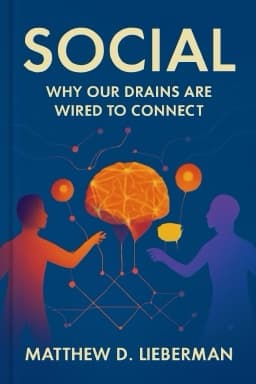
Picture yourself daydreaming in a quiet moment—your mind drifts, not to abstract puzzles or technical problems, but to the people in your life. You replay a conversation, imagine what a friend might be thinking, or wonder how a loved one is feeling. According to Matthew Lieberman’s Social: Why Our Brains Are Wired to Connect, this is not a distraction but your brain’s default mode. Recent neuroscience reveals that when we’re not focused on a specific task, our brains activate the default mode network (DMN), a system devoted to social thinking, empathy, and mind-reading.
This network is so fundamental that even newborns show signs of social thinking before they can speak or walk. By the time we reach adolescence, we’ve spent tens of thousands of hours practicing empathy, understanding others’ perspectives, and navigating the social world. Far from being a waste of mental energy, these skills are the foundation of our happiness, resilience, and success.
Why did our brains evolve this way? Because social bonds were crucial for survival. Our ancestors who could anticipate others’ intentions, cooperate, and resolve conflicts were more likely to thrive. Today, these same skills help us build friendships, find love, and work effectively in teams.
What does this mean for you? Embracing your brain’s social superpower can transform your life. By practicing active listening, expressing empathy, and reflecting on your relationships, you can deepen your connections and improve your well-being. Even brief social interactions—like a friendly chat with a neighbor—can boost your mood, lower stress, and activate the brain’s reward centers.
So, the next time your mind wanders to a friend or loved one, remember: you’re not being distracted. You’re exercising the most powerful, uniquely human skill your brain possesses. 2 1 3
Want to explore more insights from this book?
Read the full book summary