
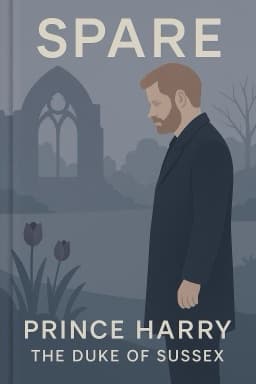
Unveiling 'Spare': The Untold Truths Behind Prince Harry’s Royal Life
A Deep Dive into Prince Harry’s Journey from Royalty to Self-Discovery

Prince Harry’s memoir, Spare, has captivated readers worldwide with its raw honesty and intimate portrayal of a life lived under extraordinary circumstances. From the outset, the book reveals the heavy burden of being the 'spare' — the secondary heir to the British throne — a role that shaped Harry’s childhood and identity in profound ways.
The memoir opens with vivid memories of Balmoral, the Scottish estate where Harry’s childhood was marked by both freedom and confinement. The contrast between the idyllic natural surroundings and the invisible chains of royal protocol sets the tone for a story about the tension between personal desire and duty. Harry’s reflections on his mother’s tragic death add a layer of poignant grief that permeates much of the book, illustrating how loss and legacy intertwine to influence his life choices.
One of the most gripping aspects of Spare is its candid discussion of mental health. Harry’s battle with anxiety, trauma, and depression — exacerbated by invasive media coverage — is portrayed with unflinching clarity. Therapy emerges as a crucial turning point, breaking taboos within a traditionally stoic royal culture. This openness offers a powerful message about vulnerability and healing, resonating far beyond the royal family.
The memoir also sheds light on the complex family dynamics that have shaped Harry’s journey. Misunderstandings, emotional distance, and the weight of legacy create a fraught backdrop for his decisions. Yet, amid conflict, there are moments of hope and attempts at reconciliation, underscoring the universal challenges of family life.
Central to the narrative is Harry’s relationship with his wife, a partnership forged under intense public scrutiny and racial bias. Their mutual support acts as a bulwark against external pressures, highlighting the strength found in love and solidarity. Parenthood further deepens this theme, as Harry reflects on raising children with an eye toward legacy and protection from the relentless spotlight.
Beyond personal stories, Spare explores Harry’s philanthropic work, connecting his charity efforts to a broader purpose and healing. His dedication to causes supporting vulnerable children and health awareness reflects a desire to transform private pain into public good, embodying the notion that meaningful work can be a path to redemption.
The memoir culminates in Harry’s courageous decision to step back from formal royal duties, a move fraught with emotional and social consequences. This act of breaking tradition symbolizes a quest for autonomy and authenticity, challenging centuries-old expectations and inviting readers to consider the balance between heritage and self-fulfillment.
In conclusion, Spare is a compelling narrative that transcends royal gossip. It is a story of love, loss, resilience, and hope — a deeply human account that invites empathy and understanding. Whether you are fascinated by the British monarchy or interested in personal stories of healing, this memoir offers rich insights and poignant reflections that linger long after the last page.
For those eager to explore the nuances of this remarkable journey, Spare stands as a beacon of courage and truth in a world often dominated by spectacle.
Want to explore more insights from this book?
Read the full book summary