
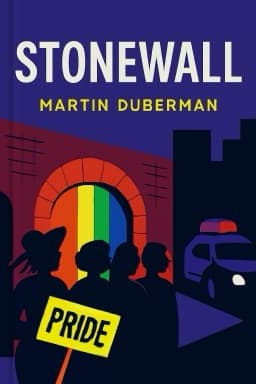
Stonewall Myths Busted: What Really Happened That Night?
Separating Fact from Fiction in the Story of a Revolution

Separating Fact from Fiction in the Story of a Revolution
Stonewall has become a symbol, but symbols are often clouded by myth. Was the uprising really started by a single coin thrown at a police officer? Were all the leaders drag queens? Did the riots end after one night? Martin Duberman’s research, along with other historians, reveals a more complex and nuanced reality.
The uprising began with a police raid—nothing new for the patrons of the Stonewall Inn. But on June 28, 1969, the crowd refused to disperse. Eyewitnesses recall a mix of anger, fear, and exhilaration as the confrontation escalated. Trans women, street youth, and drag queens were among the first to resist, but the crowd quickly grew to include lesbians, gay men, and allies from the neighborhood. The riots lasted for several nights, each bringing new faces and new forms of protest.
Many popular stories—like the coin-throwing legend—are difficult to verify, but they capture the spirit of defiance that defined the moment. What matters most is not the precise sequence of events, but the collective courage that turned a routine act of oppression into a turning point for a global movement.
By understanding what really happened, we honor the memory of those who risked everything for a chance at freedom. The truth, it turns out, is more powerful than any myth. 2 3
Want to explore more insights from this book?
Read the full book summary