
5 Timeless Strategy Rules: What Silicon Valley Titans Teach Us About Winning
Unlocking the Secrets of Gates, Grove, and Jobs for Your Own Success

Unlocking the Secrets of Gates, Grove, and Jobs for Your Own Success
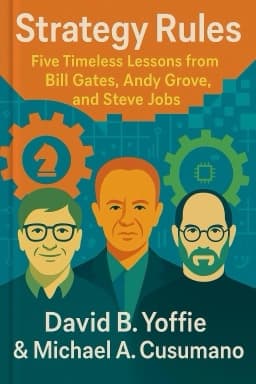
Imagine standing in a room with three of the greatest minds in business strategy—Bill Gates, Andy Grove, and Steve Jobs. What if you could distill decades of their experience into a set of rules you could use today? That’s exactly what Yoffie and Cusumano accomplish in Strategy Rules, a book that reveals the timeless lessons behind the meteoric rise of Microsoft, Intel, and Apple. In this deep dive, we’ll unpack each rule, show how it shaped the modern world, and explore how you can apply these insights to your own journey.
Rule 1: Look Forward, Reason Back
Visionary leaders don’t just extrapolate from the past—they imagine a future that doesn’t yet exist and work backward to make it real. Bill Gates, for instance, saw the personal computer revolution before most people understood what a PC was. He reasoned back from a world where every desk had a computer, shaping Microsoft’s path step by step. Andy Grove anticipated seismic shifts in the semiconductor industry, while Steve Jobs envisioned a digital hub for our lives long before smartphones and tablets became ubiquitous. This rule is about setting a bold destination and then mapping the journey in reverse, identifying the moves required to reach your goal.
Rule 2: Make Big Bets, Without Betting the Company
All three leaders took bold risks—but never reckless ones. Gates diversified Microsoft’s products before Windows was a sure thing. Grove led Intel’s dramatic pivot from memory to microprocessors, but only after ensuring the company could survive the transition. Jobs, too, was famous for cannibalizing Apple’s own products before competitors could. The key is to stage investments, hedge bets, and never risk the company’s survival on a single move. This principle applies to startups, established firms, and even personal career decisions: boldness must be balanced with prudence.
Rule 3: Build Platforms and Ecosystems
The most enduring companies don’t just sell products—they create platforms that attract partners and foster innovation. Microsoft’s dominance came from making Windows the foundation for thousands of software developers. Apple’s success today is built on the iOS ecosystem, where apps, devices, and services work together seamlessly. Intel’s chips became the standard for an entire industry. The lesson: think beyond your product. Build communities, open your platform when it makes sense, and empower others to innovate alongside you.
Rule 4: Exploit Leverage and Power
Strategy isn’t just about vision—it’s about execution and power plays. Grove’s mantra, “Only the paranoid survive,” drove Intel to outmaneuver giants through both judo (agility) and sumo (sheer scale) tactics. Gates leveraged Microsoft’s market position to bundle products and set industry standards. Jobs used Apple’s brand and design prowess to command loyalty and premium pricing. Sometimes you win by being nimble; other times, by overwhelming force. The best leaders know when to switch tactics.
Rule 5: Anchor Organizations Around Personal Strengths
Each leader built their company in their own image. Gates fostered a culture of intellectual rigor and software obsession. Grove instilled discipline and process. Jobs focused on design, perfection, and simplicity. They hired teams that complemented their weaknesses and doubled down on their unique strengths. The lesson for any leader or professional: know yourself, build around your values, and have the courage to say no to distractions.
These rules are not just for tech titans—they’re for anyone who wants to make a difference, whether you’re running a startup, managing a team, or planning your own career. By looking forward, betting wisely, building ecosystems, leveraging power, and anchoring in your strengths, you can navigate uncertainty and create lasting impact.
Ready to put these rules into action? Start by envisioning your own future, reason back to today, and take the first bold (but calculated) step.
Want to explore more insights from this book?
Read the full book summary