
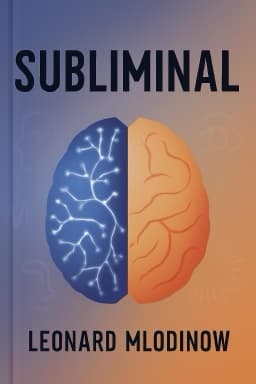
Unlocking the Hidden Mind: How Your Unconscious Shapes Every Decision You Make
Discover the astonishing power of your unconscious mind and why it governs far more than you realize

Have you ever felt like you made a choice for no apparent reason, or experienced a gut feeling that turned out to be spot on? These moments are windows into the powerful workings of your unconscious mind — a vast realm of mental activity that drives most of what you think, feel, and do without your awareness.
Modern neuroscience estimates that roughly 95% of our cognitive processing happens unconsciously, leaving only a tiny fraction to conscious thought. Far from being a mysterious or chaotic shadow, the unconscious is a highly efficient system evolved to process millions of bits of sensory data per second, enabling rapid responses to threats and opportunities that conscious deliberation could never achieve in time.
Experiments reveal astonishing capabilities of the unconscious. For example, people can distinguish differences in weight or detect subtle sensory cues below conscious thresholds, demonstrating that perception extends beyond what we realize. Our brain also fills in blind spots in vision seamlessly, preventing us from seeing gaps where no sensory data exists. These unconscious processes create a coherent and stable experience of reality.
Memory, too, is a reconstructive process shaped by unconscious influences. Each time we recall an event, the brain rebuilds it, blending fact with expectation and imagination. This explains why eyewitness testimony can be unreliable and why memories change over time.
Social interactions are heavily guided by unconscious cues and biases. Studies show that people tend to marry others with similar surnames more often than chance would predict, an example of implicit egotism. Background music in stores can sway purchasing preferences unconsciously, and packaging influences perceived quality.
Emotions arise largely outside conscious control, with brain regions like the orbitofrontal cortex processing pleasure, reward, and social feelings. Painkillers such as acetaminophen have been shown to reduce social pain, highlighting the overlap between physical and emotional suffering.
Our sense of self is actively constructed and defended by the unconscious mind through motivated reasoning and positive illusions. Most people overestimate their abilities and maintain favorable self-images by selectively processing information. This self-defense mechanism fosters resilience but can also lead to blind spots.
Unconscious categorization simplifies social complexity but risks stereotyping and prejudice. Even arbitrary group assignments trigger in-group favoritism and out-group discrimination, underlying much social conflict.
Understanding these hidden forces empowers us to become more mindful, compassionate, and authentic. By embracing the unconscious mind as an essential partner, we unlock new pathways to self-awareness and better decision-making.
In a world where the subliminal rules much of our behavior, the journey to knowing ourselves deeply begins with uncovering what lies beneath the surface.
References:
- New research challenges overemphasis on unconscious control - UNSW News, 2023 1
- Insights into unconscious thoughts and biases - PsyBlog, 2025 2
- Neuroscience reveals the potential of the nonconscious mind - Neuroscience News, 2024 3
- The rediscovery of the unconscious in cognitive science - IJCB, 2023 4
Want to explore more insights from this book?
Read the full book summary