
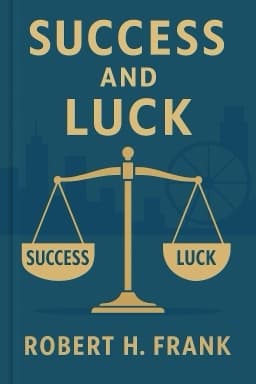
The Hidden Power of Luck: Why Success Is More Random Than You Think
Unveiling the invisible hand that shapes our destinies beyond talent and effort

For centuries, we have been told that success is the fruit of hard work, talent, and perseverance. Yet, beneath this comforting narrative lies a surprising truth: luck plays a far more significant role than most people admit. From life-or-death moments to career breakthroughs, chance events shape our paths in ways that defy intuition.
Consider the story of a man who suffered sudden cardiac death on a tennis court. His survival hinged not just on skill or preparation but on the incredible coincidence of an ambulance nearby, diverted from two unrelated accidents. This near-impossible alignment of events saved his life, illustrating how luck can literally be the difference between life and death.
Beyond such dramatic examples, luck permeates everyday life. Experiments in music popularity reveal that songs of identical quality can achieve wildly different success based solely on early random listener feedback. Similarly, in youth sports, athletes born just a few months earlier gain advantages that snowball into professional careers. Such 'butterfly effects' show how tiny initial differences, amplified by social feedback loops, create vast disparities in outcomes.
Modern winner-take-all markets exacerbate these effects. Technology enables a handful of top performers to reach global audiences and reap outsized rewards, while others with similar talent remain obscure. CEO compensation growth and the dominance of superstar musicians exemplify how small advantages, often seeded by luck, become magnified in digital and networked economies.
Yet, despite overwhelming evidence, humans resist acknowledging luck’s role. Psychological biases like the Lake Wobegon effect inflate self-perceptions, while adaptive denial helps maintain motivation. People prefer narratives crediting effort and talent, which sustain hope and effort but obscure the complexity of success. This denial has social costs, fostering inequality and underinvestment in public goods.
Recognizing luck fosters humility and gratitude, qualities that enhance cooperation and social trust. Policies such as progressive consumption taxes can reduce wasteful spending driven by social comparisons and fund essential infrastructure. Embracing the role of chance invites a more compassionate, fair society where success is seen as a shared blessing rather than a solitary triumph.
In a world where luck is an invisible hand guiding many outcomes, understanding and embracing it can transform how we view ourselves and others, leading to greater empathy and wiser choices.
Sources: Insights synthesized from recent books on luck and success, including psychological research and market analyses. See also top literature on the topic at SoBrief.com for further reading.
Want to explore more insights from this book?
Read the full book summary