
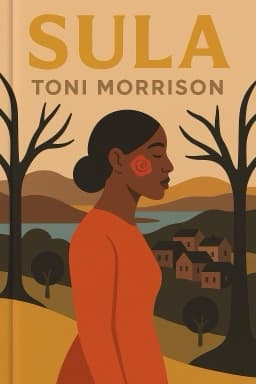
Breaking the Mold: How ‘Sula’ Challenges Conventional Morality and Celebrates Ambiguity
An exploration of the novel’s nuanced approach to good, evil, and the fear of freedom.

In a world often divided into clear categories of good and evil, Toni Morrison’s Sula stands out as a profound challenge to these binaries. The novel presents characters who embody contradictions, defying easy moral classification. Sula Peace, frequently cast as a villain by her community, is revealed as a symbol of freedom—a force that disrupts social order and provokes fear.
The novel invites readers to move beyond simplistic judgments and to appreciate the nuanced realities of human behavior. It critiques the societal impulse to label and exclude those who challenge norms and highlights the cost of such exclusion.
By embracing ambiguity, Sula encourages empathy and a deeper understanding of the human condition. It reminds us that morality is often a reflection of social power dynamics and personal fears rather than absolute truths.
This exploration of morality enriches the novel’s thematic depth and offers valuable insights for contemporary readers grappling with questions of identity, freedom, and judgment.
References: Drawn from philosophical and literary critiques on morality and ambiguity in Sula 2 , 3 , 1 .
Want to explore more insights from this book?
Read the full book summary