
Unmasking the Hidden Depths of Toni Morrison’s ‘Sula’: A Journey Through Friendship, Freedom, and Fierce Feminism
Discover the complex layers of identity, community, and morality in Morrison’s groundbreaking novel.

Toni Morrison's novel Sula is often celebrated for its vivid portrayal of African American life and the complexities of female friendship. Yet beneath its surface lies a rich tapestry of themes that challenge readers to reconsider notions of identity, morality, and community. Set in the enigmatic neighborhood known as the Bottom—a place that embodies paradox both geographically and socially—the novel introduces us to characters whose lives are intertwined with history, trauma, and resilience.
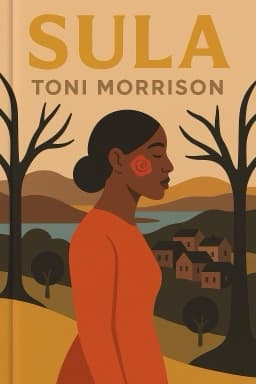
The friendship between Sula Peace and Nel Wright is at the heart of the narrative, illustrating how contrasting personalities—rebellion and conformity—can create bonds that both nurture and fracture. Their relationship serves as a microcosm for broader societal tensions, especially those related to race, gender, and freedom. Sula’s birthmark, shifting in appearance, becomes a potent symbol of her outsider status and the community’s conflicted perception of her.
Behind these young women stand powerful matriarchs like Eva and Hannah, whose sacrifices, defiance, and contradictions shape the family and community dynamics. Eva’s missing leg is emblematic of endurance and harsh choices, while Hannah’s unapologetic sexuality challenges social norms, influencing Sula’s worldview.
The Bottom itself is a character—its social fabric woven through rituals like National Suicide Day and church gatherings, which bind the community amidst economic pressures and encroachment by commercial interests. These elements highlight the tension between tradition and change, stability and upheaval.
Morrison’s narrative structure, flowing non-linearly through time and memory, deepens the novel’s emotional impact. The shifting perspectives—from omniscient narration to intimate character views—invite readers to engage actively with the story’s moral ambiguity, where freedom is both a gift and a threat, and characters defy simple labels of good or evil.
Ultimately, Sula is a meditation on the power of imagination and legacy. It shows how relationships and stories transcend lifetimes, shaping identities and communities in profound ways. Morrison’s work challenges us to embrace complexity, to question our judgments, and to celebrate the courage it takes to forge one’s own path.
This exploration only scratches the surface of the rich themes and insights contained within Sula. Join us as we dive deeper into its world, uncovering the nuances of its characters and the enduring relevance of its message.
References: Analysis and thematic insights drawn from literary critiques and scholarly articles on Toni Morrison’s Sula 1 , 2 , 3 .
Want to explore more insights from this book?
Read the full book summary